Soir Records
1. The Mirage at Giza: When Underground Berlin Subsumed the Ancient World
On the evening of April 19, 2024, the plateau of the Great Pyramids of Giza in Cairo transformed into an unprecedented cultural tableau. Against the 4,500-year-old limestone megaliths of Khufu and Khafre, a monumental, polished reflective structure shaped like an undulating cumulus cloud hovered suspended in mid-air over a raised platform.
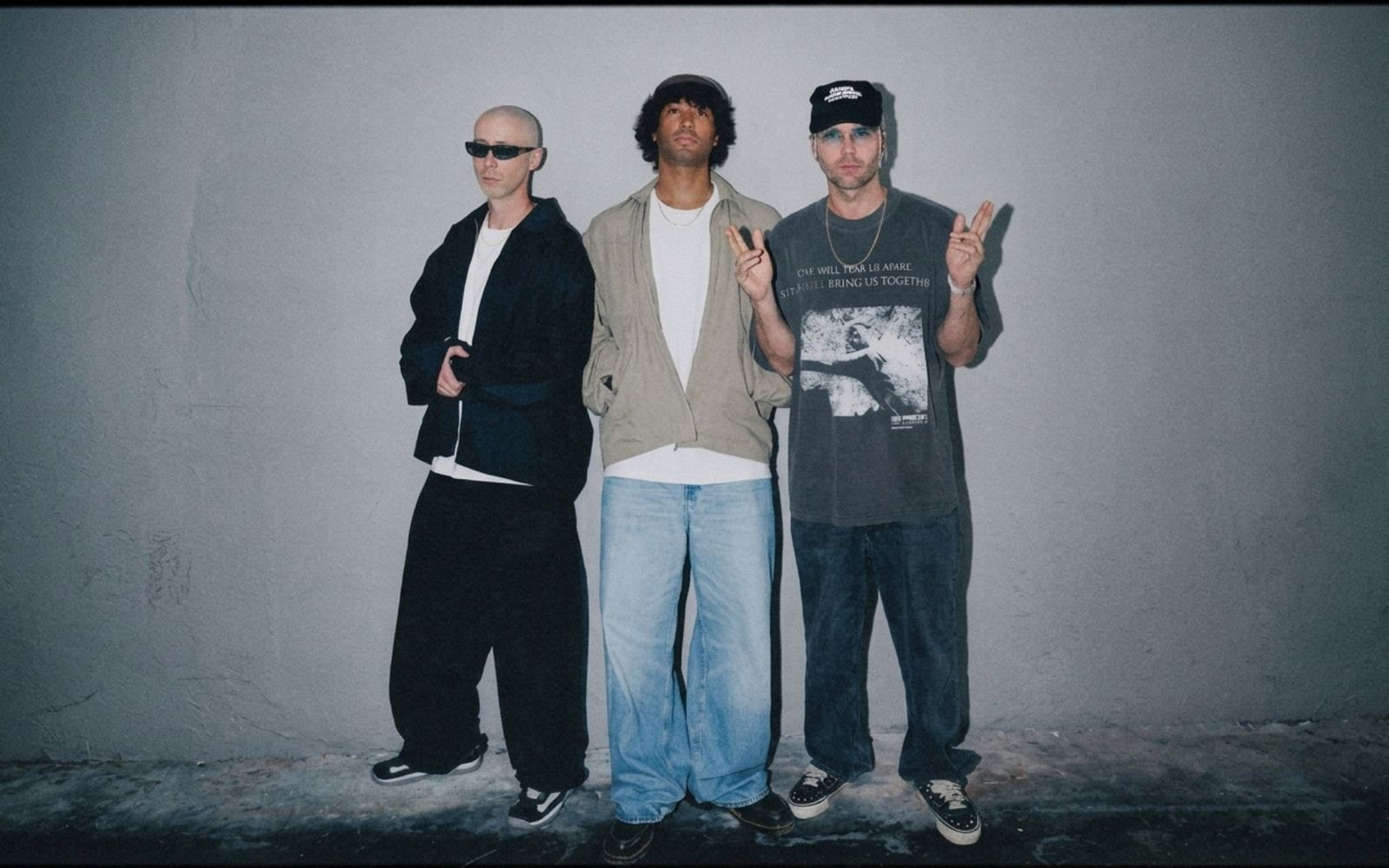
Beneath this mirrored icon—affectionately christened the "Kloud"—stood three men in oversized unbranded tees, baggy utility trousers, and faded baseball caps: Adam Port, &ME, and Rampa. Surrounding them in a tight 360-degree perimeter, ten thousand revellers moved in synchronized, hypnotic cadence to 120-BPM syncopated percussion, warm analog sub-bass, and bittersweet piano chords.
The composition of that crowd was a masterclass in modern cultural convergence. Front-row fashion directors from Milan and Paris stood shoulder-to-shoulder with Gulf dignitaries, American venture capitalists, European supermodels, and Cairo’s creative underground. Above them, an armada of synchronized drones illuminated the desert sky, sketching glowing geometric sigils over ancient tombs while high-powered laser arrays traced the contours of the pyramids.
To anyone who remembers Berlin club culture in 2009, this spectacle was nothing short of surreal.
Fifteen years earlier, Keinemusik was founded in a modest Kreuzberg flat by a tight-knit circle of skate-punks, graffiti artists, and hip-hop turntablists. Their very name—Keinemusik (literally translating to "No music")—was conceived as a sardonic, self-deprecating middle finger to Berlin’s dogmatic, hyper-serious techno police. In a city where monochrome attire, 134-BPM industrial kicks, and monastic austerity were treated as religious law, this crew dared to play swinging house grooves, R&B vocal snatches, and sunny, unpretentious melodies.
Today, that self-run DIY imprint has evolved into electronic music’s most commercially potent, aesthetically desired, and culturally insulated luxury brand. They do not merely sell concert tickets; they sell cultural belonging. Their limited apparel drops vanish in seconds, fetching quadruple-digit markups on resale platforms. Their unreleased club IDs spark billion-stream global phenomena. Their production signatures underpin Drake’s most controversial sonic pivot. And their signature aesthetic has redefined the global dancefloor from Zamna Tulum to the Brooklyn Navy Yard.
How did four Berlin outsiders engineer the most sophisticated cultural Trojan horse in modern dance music? The answer lies in the intersection of skate-culture authenticity, proprietary hardware engineering, ruthless scarcity economics, and an innate understanding of modern luxury sociology.
2. The Anti-Dogma Manifesto (2009–2018): Skate Punks, Turntablism, and Monifaktur
To understand the Keinemusik phenomenon, one must dismantle the myth of the overnight sensation. Keinemusik’s luxury hegemony in 2026 is built on an uninterrupted fifteen-year foundation of underground credibility, self-ownership, and visual discipline.
The collective was forged around five core personalities, each bringing an orthogonal discipline to the table: * Adam Port: A former hip-hop turntablist with deep roots in Berlin's hardcore punk and straight-edge scene, bringing rhythmic swagger and genre-bending eclecticism. * &ME (André Boadu): A master of sonic restraint and rhythmic architecture, whose understated, polyrhythmic low-end became the collective’s rhythmic backbone. * Rampa (Gregor Sütterlin): A relentless tinkerer, carpenter, DJ, and hardware developer with an instinctive feel for physical product design and dancefloor tension. * Reznik: Music journalist, DJ, cultural commentator, and the collective's conceptual anchor, responsible for editorial voice and resident curation. * Monja Gentschow: The indispensable visual artist whose Monifaktur studio hand-drew every vinyl sleeve, flyer, and catalog identity from day one.
THE KEINEMUSIK FOUNDATIONAL PILLARS (2009)

     ┌────────────────────────────────────────────────────────┐
     │                   KEINEMUSIK DIY ETHOS                  │
     └───────────────────────────┬────────────────────────────┘
                                 │
         ┌───────────────────────┼───────────────────────┐
         ▼                       ▼                       ▼
  [ Sonic Craft ]       [ Tactile Visuals ]     [ Industrial Independence ]
   &ME, Rampa, Port       Monja Gentschow         Self-Distribution,
   Hip-Hop Swing &        Hand-Drawn Covers       Zero Major Sub-Labels,
   Afro-Percussive Pulse  Monifaktur Identity     Total IP Retention
In 2009, Berlin’s electronic landscape was gripped by the monolithic supremacy of minimal techno and the emergent industrial aesthetic of clubs like Berghain. The predominant tone was grim, ascetic, and intensely ideological. Keinemusik positioned itself in deliberate opposition to this orthodoxy.
They launched with catalog release KM001—the F.E.A.R. EP by &ME—establishing a blueprint that refused to take itself too seriously. Where other imprints embraced digital sterility, Monja Gentschow wrapped their physical vinyl records in whimsical, naive-art illustrations featuring anthropomorphic clouds, mischievous characters, and hand-lettered typography.
For the first decade, Keinemusik operated as a quintessential grassroots label. They threw sun-drenched daytime open-airs at Chalet and Stattbad Wedding, held long residencies at Watergate, and pressed vinyl in limited runs. They were beloved by European selectors, but they remained comfortably insulated from commercial pop culture.
Crucially, during this decade of incubation, they resisted every standard corporate temptation. They refused to sell distribution stakes to major conglomerates. They did not license their catalog to generic compilation mills. They maintained 100% equity in their masters, publishing, and merchandise. They built a loyal, dedicated community based on pure musical trust—an asset that would soon yield extraordinary financial leverage.
3. Proprietary Engineering: TEILE Elektronik and the Mechanics of Groove
A critical factor that distinguishes Keinemusik from ordinary DJ collectives is their obsession with physical engineering. While most touring DJs rely entirely on off-the-shelf Pioneer DJM mixer effects, the Keinemusik crew recognized early on that standard digital FX units sounded flat, clinical, and generic.
Rampa, leveraging his background in woodworking, mechanics, and audio tinkering, decided to build the tools the market lacked. Together with his hardware partners, he established TEILE Elektronik, a boutique hardware manufacturer designing analog-digital performance effects specifically engineered for club booths.
Their flagship release, the TEIL1 (affectionately dubbed "the keinedelay"), became an immediate secret weapon in electronic music booths worldwide: * Analog Dry Signal Path: Unlike digital processors that digitize and color the master audio signal, the TEIL1 keeps the original club track completely pristine in the analog domain, routing only the delayed repeats through a 24-bit DSP core. * Arcade-Style Tactile Triggers: Heavy-duty, momentary arcade push buttons allow the DJ to inject rhythmic dub delays, snare repeats, and vocal stutter loops on the fly with percussive precision. * Tape-Speed Modulation & Built-in Looper: Pitch-warping tape emulation modes and a 12-second live looper enable the trio to deconstruct tracks in real time during extended back-to-back performances, creating signature, tension-drenched build-ups that cannot be replicated with software plugins.
THE DUAL INNOVATION ENGINE:

  [ TEILE Hardware Innovation ] ──► Hand-built delay/reverb effects (TEIL1 / TEIL2)
               │
               ▼
  [ Sonic Differentiation ]    ──► Real-time tape pitch-warps & live dub looping
               │
               ▼
  [ Booth Performance Alpha ]  ──► B2B2B dynamic sets that sound fundamentally distinct
                                   from standard USB-stick playlist selectors
By introducing specialized hardware into their booth setup, Keinemusik established an unmistakable sonic signature. The hypnotic, drifting delay tails and warm analog tape warps that define their marathon sets are not software presets downloaded from the internet; they are the result of bespoke hardware crafted in Berlin workshops.
This engineering ethos established institutional respect among audiophiles and serious producers long before the crew crossed into luxury pop culture.
4. The Cultural Breakout: GTA Cayo Perico and Drake’s Honestly, Nevermind
The transition of Keinemusik from European tastemakers to global cultural gatekeepers occurred via two seismic pop-cultural catalysts between 2020 and 2022.
The Virtual Playground: GTA Online: The Cayo Perico Heist (2020)
In late 2020, Rockstar Games announced The Cayo Perico Heist, the largest content expansion in the history of Grand Theft Auto Online. As part of the update, Rockstar partnered with Keinemusik to introduce the collective as in-game characters.
Adam Port, &ME, and Rampa underwent extensive motion-capture sessions to bring their likenesses into the virtual universe. In the game, players were tasked with flying Keinemusik to a private tropical island, where the trio performed an exclusive, sun-drenched beach party set.
This collaboration was pivotal for three reasons: 1. Demographic Expansion: It exposed Keinemusik's sophisticated Afro-rhythmic house sound to tens of millions of gamers across North America, Asia, and Latin America who had never set foot in an underground European nightclub. 2. Fashion Integration: Keinemusik worked with Rockstar to introduce real-world streetwear and high-fashion labels—such as Berlin skateboard imprint Civilist and Polish luxury label MISBHV—into the game's digital boutiques, establishing their status as curators of fashion. 3. Virtual-to-Physical Crossover: It established a template for music discovery that bypassed legacy radio and traditional music journalism entirely. (As we explored in our deep-dive on GTA 6 Radio and CircoLoco Records, gaming ecosystems have become modern electronic music's most lucrative A&R pipeline).
The Pop Coronation: Drake’s Honestly, Nevermind (2022)
If Grand Theft Auto opened the digital door, Canadian superstar Drake kicked it off its hinges.
In June 2022, Drake surprised the music industry by releasing his seventh studio album, Honestly, Nevermind. Departing sharply from his trademark trap and R&B formulas, the project was an unapologetic deep dive into house, club music, and South African Black Coffee-influenced Afro House.
When the album credits were revealed, two names featured prominently across the project’s flagship records: &ME and Rampa. The duo co-produced and co-wrote two of the album’s most critical tracks: * "Falling Back" – The opening club anthem that set the aesthetic tone for the entire LP, co-produced by &ME, Rampa, Alex Lustig, and Beau Nox. * "A Keeper" – A percussively driven, melancholic club record produced by &ME, Rampa, and Wondra030.
While mainstream hip-hop purists were initially baffled by Drake's stylistic detour—eliciting mixed reviews from outlets like Pitchfork—the electronic underground understood the gravity of the moment. Drake had not hired generic American pop-EDM producers; he had gone directly to Kreuzberg to tap the authentic creative pulse of Keinemusik.
The album transformed house music into the default soundtrack of the global celebrity ecosystem. Overnight, &ME and Rampa were no longer simply underground DJs touring the European summer circuit; they were multi-platinum, Grammy-associated producers possessing direct cultural access to the highest echelons of global entertainment.
5. Semiotics of the Sacred: The "Kloud" and the Post-Festival Stage
As their profile expanded into arena-scale venues, Keinemusik confronted electronic music's foundational aesthetic flaw: the static sterility of the DJ booth.
For three decades, large-scale dance music production had been dominated by an arms race of oversized LED video screens. Festival mainstages blasted audiences with epileptic strobe sequences, 3D character animations, and corporate sponsor logos. The DJ stood dwarfed behind an altar of aluminum trussing, isolated from the audience.
Keinemusik’s counter-revolution was both minimalist and architecturally radical: The Kloud.
THE SEMIOTIC SHIFT IN ELECTRONIC STAGE ARCHITECTURE:

[ Traditional EDM Mainstage ] ──► Wall of LED Video Screens ──► Distant, Heroic DJ ──► Passive Spectacle
                                                                                           │
                                                                                           ▼
[ Keinemusik "Kloud" Space ] ──► Kinetic Mirrored Totem   ──► 360° Circular Booth  ──► Sacred Communion
First conceptualized for intimate open-air gatherings and refined into an engineering marvel by specialized stage fabrication studios like Cloud Studio and Hangar Creates, the Kloud replaced digital screens with physical, sculptural presence: * The Mirrored Totem: Suspended directly over the mixer, the reflective cloud captures and warps the lighting, the movement of the dancers, and the ambient environment. At sunset in Ibiza or Mykonos, it reflects the amber Mediterranean sky; at night in Cairo, it shimmers with laser refractions. * The 360-Degree Circular Booth: Keinemusik completely abandoned the traditional proscenium stage. The booth is positioned at eye-level in the center of the venue, with dancers, friends, and VIP guests enveloping the selectors on all sides. * The De-Sacralization of the Performer: By playing at the same level as the crowd rather than on a towering platform, Adam Port, &ME, and Rampa re-coded the rave not as a rock concert, but as a circular tribal communion. (For a granular sociological breakdown of this dynamic, read The 4 AM Paradox: How 360° Booths Killed EDM Drops).
The Kloud functions as a masterclass in brand semiotics. It provides an instantly identifiable, non-linguistic visual watermark. In an era where festival clips are viewed on five-inch mobile screens, any three-second video featuring the reflective cloud immediately telegraphs: This is a Keinemusik event.
6. The "Move" Phenomenon: Anatomy of a Global Streaming Juggernaut
In July 2024, the collective’s commercial power reached its zenith with the release of "Move" by Adam Port and Pakistani-American producer Stryv, featuring vocals from singer-songwriter Malachiii.
The trajectory of "Move" illustrates how viral algorithmic distribution and elite tastemaker road-testing now operate in seamless synergy:
| Milestones & Vectors | The "Move" Timeline (2024–2026) | Strategic Cultural Impact |
|---|---|---|
| Phase 1: Underground Incubation | Debuted as an unreleased ID at Brooklyn Mirage and Pacha Ibiza (May 2024) | Created insatiable exclusivity; dancefloor videos flooded TikTok before official metadata existed. |
| Phase 2: Algorithmic Explosion | Unofficial rips generated over 100M impressions on TikTok & Instagram Reels | Pre-save numbers broke European independent label records; sound became the official summer audio meme. |
| Phase 3: Chart Domination | Official Keinemusik release (July 2024); #1 on Spotify Global Dance, #1 on Billboard Hot Dance | Topped streaming charts in over 40 countries; generated over 500 million streams across DSPs. |
| Phase 4: Pop Crossover | Camila Cabello vocal remix released (August 2024) | Propelled the record onto Top 40 mainstream radio in the US, UK, and Latin America. |
| Phase 5: Institutional Honors | Billboard Music Award Nomination (Best Afrobeats Song); 67th Grammy Award consideration | Triggered industry-wide debate over the Grammy categorization of hybrid Afro-Latin-Electronic records. |
The Grammy Categorization Friction
The massive success of "Move" provoked profound institutional headaches for music industry gatekeepers.
At the 67th Annual Grammy Awards, the record was entered for consideration across multiple prestigious categories, including Best Dance/Electronic Recording, Best Pop Dance Recording, and African music fields. Meanwhile, the Billboard Music Awards officially nominated "Move" for Best Afrobeats Song—a nod that simultaneously celebrated its polyrhythmic structure while sparking debates among West African purists over genre appropriation and sonic classification.
Though "Move" was ultimately shut out of the final 2025 Grammy nominations ballot in favor of legacy American pop-dance acts, the cultural verdict had already been rendered. An independent single produced by a Berlin underground veteran and a rising Los Angeles-based producer on a boutique German DIY label had outperformed multi-million-dollar major-label priority releases across every measurable global metric.
7. Crowd Sociology: High Fashion, Tech Sovereignty, and the "Stealth Wealth" Dancefloor
To witness a Keinemusik show in 2026 is to observe a fundamental mutation in the sociology of the electronic dancefloor.
The traditional rave was historically an egalitarian sanctuary—a darkened space where socioeconomic status was dissolved under the cover of sweat, darkness, and shared anonymity. Keinemusik has inverted this dynamic, transforming the dancefloor into a hyper-visible theater of cultural and economic capital.
The Demographics of the Kloud
A Keinemusik audience is no longer composed primarily of working-class clubbers saving their wages for a weekend at Watergate. Instead, the floor represents an alliance of global high-status cohorts: * The Fashion Elite: Creative directors, stylists, and models (from Kendall Jenner and Gigi Hadid to runway regulars) who treat the event as an extension of Paris Fashion Week. * The Tech & Venture Class: Founders, Web3 developers, and venture partners from San Francisco, London, and Dubai who view the collective’s bespoke independence as a cultural mirror of their own decentralized ethos. * Global Creative Nomads: Ultra-mobile tastemakers who migrate seasonally between Ibiza, Mykonos, Tulum, Bodrum, and St. Barths.
The Uniform: "Post-Rave Stealth Wealth"
The visual signifiers of this crowd represent the death of vulgar ostentation. You will not find neon spandex, glitter face-paint, or branded designer logos.
Instead, the uniform is governed by "Stealth Wealth" and understated luxury minimalism: * $1,200 raw unbleached linen overshirts from Jacquemus or Loro Piana. * Distressed utilitarian denim and architectural cargo trousers from Rick Owens or Balenciaga. * Bottega Veneta tire-tread boots designed to handle both desert dust and private jet tarmac. * Subtle, matte-finished gold chains and Chrome Hearts silver rings. * The ultimate status flex: A faded, limited-edition Keinemusik "Peace" cap, signaling that the wearer was present at an intimate open-air years before the mainstream arrived.
The "Human Wallpaper" Economy
The VIP table layout at a Keinemusik event represents a radical financial restructuring of nightlife architecture.
In legacy clubs, VIP tables were placed in roped-off private mezzanine balconies overlooking the dancefloor. At a Keinemusik show, the most expensive tables—commanding minimum spends between €15,000 and €50,000—are placed directly behind and beside the DJ booth.
THE 360° BOOTH PRESTIGE WATERFALL:

          [ The General Admission Floor ] ──► Atmospheric Base & Raw Energy
                         │
                         ▼
          [ The Front Perimeter Ring ]    ──► High-Fashion Influencers & Creatives
                         │
                         ▼
          [ The 360° VIP Inner Sanctum ]  ──► €25,000+ Table Spends & Celebrities
                         │
                         ▼
          [ The DJ Console / The Kloud ]  ──► Adam Port, &ME, Rampa
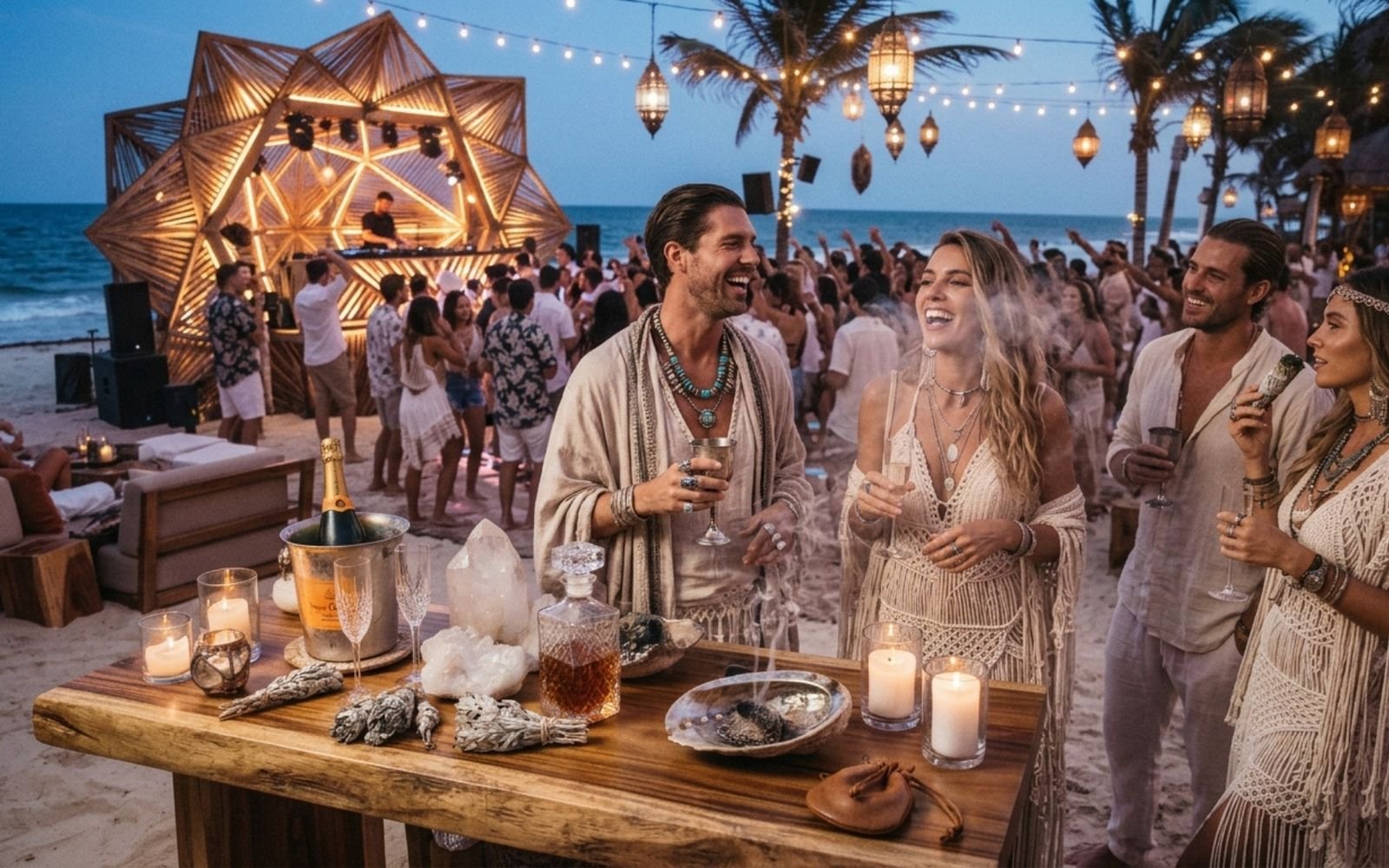
The sociological consequence is profound: the ultra-wealthy do not purchase seclusion; they purchase visibility within the content stream. They pay five-figure sums to serve as the human backdrop in millions of smartphone videos uploaded to TikTok and Instagram. In the attention economy of 2026, proximity to the cultural fountainhead is the ultimate luxury asset. (See our related study on Shamanic Chic & $15,000 Tables: The Sociology of the Boho-Luxury Dancefloor).
8. The Supreme of Electronic Music: Scarcity Economics & The Merch Machine
Most electronic music merchandise is an afterthought: scratchy Gildan cotton t-shirts emblazoned with oversized festival logos, sold at damp cloakrooms for €30 and discarded after three washes.
Keinemusik approached apparel through an entirely different paradigm. They studied the streetwear playbook perfected by brands like Supreme, Palace, and Stüssy, merging it with the fine-art sensibilities of Monja Gentschow.
The Anatomy of a Drop
The collective does not maintain permanent retail stock. Products are released via Shop Keinemusik through unannounced, strictly limited "drops."
- The Product Portfolio: Heavyweight 280-GSM boxy tees, custom jacquard knit scarves, garment-dyed hoodies, TEILE hardware accessories, and their universally coveted embroidered baseball caps.
- Velocity of Consumption: When a drop is announced on their private channels, an entire production run of 2,000 caps (€45 retail) sells out in under 90 seconds.
- The Secondary Market Premium: Within thirty minutes of a sell-out, items appear on platforms like Grailed and eBay commanding 300% to 800% markups. A vintage Keinemusik peace logo cap routinely trades hands for €250 to €450, while limited tour jackets fetch over €1,200.
THE MERCHANDISE RESALE MULTIPLIER:

[ Retail Drop on Shop Keinemusik ] ──► €45 Base Price  ──► Sells out in <90 Seconds
                 │
                 ▼
[ Secondary Resale Market ]        ──► Grailed / eBay  ──► Trades at €250 – €450
Why the Strategy Succeeds
Keinemusik’s merchandise works because it operates as a cultural handshake.
Because the branding is understated—often utilizing small, hand-drawn peace signs, subtle cloud motifs, or minimalist typography designed by Monja Gentschow—it avoids looking like a commercial billboard. Wearing a Keinemusik cap in an airport lounge or an upscale gym is an insider signal: it silently communicates to other members of the tribe that you belong to the same aesthetic class.
By refusing to meet market demand—by deliberately producing fewer garments than their fanbase demands—Keinemusik preserves absolute brand equity. They sacrifice short-term retail volume to protect long-term cultural desire.
9. The Modern Electronic Ecosystem: Strategic Playbook
For independent artists, record labels, and collective founders, the Keinemusik trajectory offers an invaluable strategic blueprint. Their rise proves that an independent entity can reach the apex of global entertainment without surrendering equity or creative control to major corporate conglomerates.
| Strategic Parameter | The Legacy Record Label Model (2012) | The Keinemusik Modern Ecosystem (2026) |
|---|---|---|
| Intellectual Property | Master rights signed away to major record labels for upfront advances. | 100% self-owned masters, publishing, and global sync control. |
| Visual Architecture | Outsourced digital graphic designers; generic 3D CGI festival visuals. | In-house fine artist (Monja Gentschow); hand-drawn tactile identity. |
| Stage Production | Flashing LED screens, pyrotechnics, corporate stage sponsors. | Sculptural mirrored totem (The Kloud); 360° circular eye-level staging. |
| Performance Tools | Standard factory mixer presets and USB drives. | Proprietary analog-digital hardware engineering (TEILE Elektronik). |
| Merchandise Strategy | Mass-produced, print-on-demand t-shirts with large logos. | Scarcity-driven streetwear drops; secondary market luxury value. |
| Audience Relationship | One-way broadcast marketing; passive social media followers. | Cult community; direct-to-consumer drops; high cultural capital. |
Five Actionable Lessons for Independent Producers
- Never Outsource Your Visual Soul: Do not rely on generic stock graphics or freelance designers who do not live inside your sound. Partner with a dedicated visual artist who treats your label’s aesthetic identity as a unified body of work.
- Build Your Own Tools: Sonic differentiation cannot occur when every artist uses the exact same software presets. Whether it is custom Ableton racks, analog modular routing, or boutique pedals, develop an idiosyncratic technical workflow that belongs exclusively to you.
- Embrace the Power of the "No": Keinemusik's power stems not from what they accepted, but what they declined. Saying no to bad brand sponsorships, generic festival side-stages, and cheap licensing deals preserves the aura of exclusivity.
- Anchor Music in Physical Community: Long before they commanded stadiums, Keinemusik spent a decade throwing free open-airs and intimate residencies. Viral social algorithms can amplify momentum, but they cannot manufacture an authentic local root system.
- Treat Fashion as Architecture, Not Promo: If you release merchandise, treat it with the same respect as a runway collection. Source premium heavy cottons, obsess over boxy cuts, and manufacture in limited quantities. Scarcity generates obsession; ubiquity breeds indifference.
10. What This Means for You in 2027: The Luxury Hegemony and Its Discontents
As we look toward 2027, the "Keinemusik Effect" stands as the defining paradigm of the electronic music industry. Across the world, hundreds of emerging collectives in London, Paris, Istanbul, and São Paulo are actively copying the formula: constructing circular booths, commissioning custom stage totems, and designing minimalist streetwear lines.
Yet this meteoric success carries inherent vulnerabilities: * The Backlash of the Underground: When a DIY collective becomes the favorite soundtrack of billionaire tech titans and VIP bottle-service tables, they inevitably risk alienating the countercultural community that birthed them. * The Counter-Rebellion: The hyper-visibility of the Keinemusik crowd—where every drop is filmed on thousands of raised smartphones—has ignited a powerful counter-movement. Underground spaces are aggressively implementing strict no-phone policies, returning to dark, unrecorded basement communion. (Explore this emerging friction in our analysis of The Phone-Free Rebellion vs. The Content Economy). * The Saturation of Afro-Melodic House: As major labels pour millions into signing watered-down copies of "Move," the genre faces imminent sonic exhaustion unless artists continue pushing into unexpected cross-genre territories.
Yet through it all, Keinemusik’s core defensibility remains intact because of one unalterable reality: the music itself is flawless.
Strip away the kinetic cloud, the Giza laser arrays, the supermodel entourages, and the Drake production credits. Place Adam Port, &ME, and Rampa in a pitch-black basement with two turntables, a mixer, and a pair of TEIL1 delay pedals, and they will still command the room for eight straight hours with effortless, polyrhythmic mastery.
Luxury branding can magnify cultural power, but it cannot manufacture genuine rhythmic alchemy out of thin air. For producers and labels navigating the competitive wilderness of 2026, that remains the ultimate lesson: master your craft with monastic devotion first, and the world will eventually build an altar around your booth.
Key Takeaways
- Fifteen Years of Self-Ownership: Keinemusik’s luxury brand dominance in 2026 was not manufactured by a corporate label; it was built upon fifteen years of uninterrupted master ownership, independent distribution, and skate-culture DIY values dating back to Berlin in 2009.
- Proprietary Hardware Innovation: Through Rampa's boutique hardware brand TEILE Elektronik (notably the TEIL1 delay), the collective engineered bespoke analog-digital performance tools that gave their live B2B sets a unique, tactile sonic signature impossible to replicate with digital presets.
- The Cross-Cultural Breakthrough: Strategic creative pivots—including their motion-captured virtual residency in GTA Online: The Cayo Perico Heist and co-producing Drake's foundational house tracks ("Falling Back", "A Keeper")—catapulted the collective into the global pop stratosphere.
- Architectural & Semiotic Revolution: By replacing generic LED festival screens with their signature mirrored "Kloud" and pioneering the 360-degree circular eye-level booth, Keinemusik transformed dance music staging from distant spectacle into an intimate, high-fashion ritual.
- Streetwear Scarcity Playbook: Through Shop Keinemusik and fine-artist Monja Gentschow’s visual direction, their limited apparel drops sell out in under 90 seconds, sustaining luxury streetwear resale premiums between 300% and 800% on Grailed and eBay.
FAQ
What is the connection between Keinemusik and Drake's Honestly, Nevermind?
Keinemusik members &ME (André Boadu) and Rampa (Gregor Sütterlin) served as key co-producers and co-writers on Drake’s dance-focused seventh studio album, Honestly, Nevermind (June 2022). They produced the album's lead club track "Falling Back" (alongside Alex Lustig and Beau Nox) and the melancholic groove "A Keeper" (alongside Wondra030). Their direct involvement provided Drake with authentic underground house credibility and introduced Keinemusik's syncopated, melodic sound to mainstream global audiences.
How did Adam Port and Stryv's "Move" become a global viral hit?
"Move" was produced by Keinemusik co-founder Adam Port and Los Angeles-based producer Stryv, featuring vocals by Malachiii. The track followed an organic, multi-tiered trajectory: it was first road-tested as an unreleased ID during Keinemusik's marathon sets at Brooklyn Mirage and Pacha Ibiza. Smartphone clips of the unreleased track went massively viral on TikTok and Instagram Reels, generating over 100 million impressions before its official July 2024 release. The single reached #1 on the Spotify Global Dance chart and Billboard Hot Dance/Electronic Songs, received a Billboard Music Award nomination for Best Afrobeats Song, and spawned a major remix featuring pop superstar Camila Cabello.
What is the "Kloud" installation at Keinemusik shows?
The "Kloud" is Keinemusik’s signature visual and stage installation: a large, custom-fabricated, undulating mirrored cloud suspended directly over the DJ booth. Designed in collaboration with specialized architectural fabrication studios (including Cloud Studio and Hangar Creates), the kinetic sculpture catches and reflects ambient lights, lasers, and sunset colors down onto the dancefloor. It functions as an iconic visual trademark, replacing traditional LED video walls and establishing an intimate, 360-degree circular performance space.
Why does Keinemusik merchandise sell out so quickly and resell for high prices?
Keinemusik treats merchandise like a high-end streetwear label rather than a music promotional outlet. Visuals are hand-illustrated by founding collective artist Monja Gentschow, garments are manufactured using premium heavy-cotton silhouettes, and products are released in unannounced, strictly limited drops on Shop Keinemusik. By deliberately under-supplying market demand, items sell out in under 90 seconds and trade on secondary resale platforms like Grailed and eBay for 300% to 800% above retail.