Soir Records
One Forgotten Vocal Take Among Hundreds That Ignited the Planet
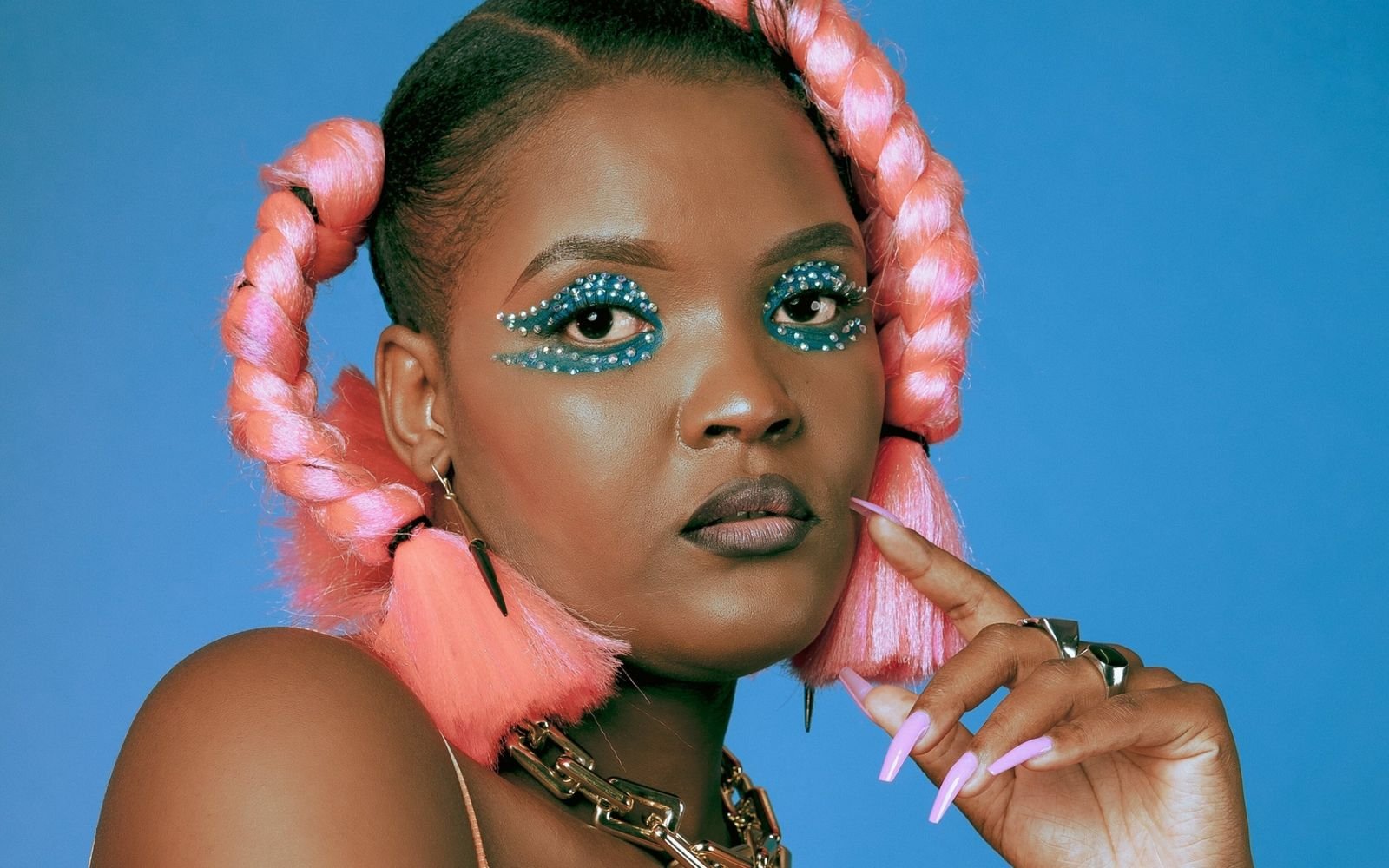
The greatest Cinderella story in twenty-first-century electronic music did not begin inside a multi-million-dollar recording complex in Los Angeles, nor was it engineered during an executive A&R writing camp in London. It began in Thika, Kenya, where singer, songwriter, and former street hawker Sofiya Nzau stood in front of a condenser microphone inside a modest home studio run by her husband and producer, Stephen "Benni"umbua. Between 2020 and 2022, after losing casual work during the pandemic lockdowns, Nzau turned to the quiet digital gig economy of recording royalty-free vocal sample packs for Western producers.
At first, Nzau hesitated to record in her native tongue, Kikuyu, assuming international producers in Berlin, São Paulo, or Amsterdam would only purchase vocal hooks sung in English. Her husband convinced her otherwise: the global dancefloor didn't want another generic English pop topline; it craved texture, cadence, and ancestral truth. As Nzau and Zerb later reflected in their landmark interview with Splice, she could not even recall the exact afternoon she sang the phrase "Mwaki"—which translates to "Fire" in Kikuyu—because it was just one stem among hundreds of vocal loops and harmonies tracked for her packs distributed across platforms like Splice and Loopmasters.
Yet the lyrics she improvised on that take were far from meaningless syllables. In Kikuyu, Nzau sang a cautionary domestic tale familiar across East African households: a daughter warning her father not to interfere with her marriage out of greed, promising that if he tries to break up her home, she will ignite a metaphorical fire (mwaki). Months later, six thousand miles away in São Paulo, Brazilian producer Matheus Zerbini—known as Zerb—spent an hour scrolling through vocal libraries on Splice while sketching an EP centered on love. He clicked play on Nzau’s dry vocal stem. Within hours, he had built a rolling, hypnotic 120 BPM groove beneath her voice, never imagining that this transcontinental digital encounter would amass hundreds of millions of streams, dominate Ibiza, and trigger a permanent reckoning over sample ethics in dance music.
The Anatomy of a Cross-Continental Detonation
When Zerb initially uploaded the demo of "Mwaki" and messaged Nzau on Instagram simply asking what her Kikuyu lyrics meant, neither artist anticipated the speed at which the algorithm would seize the record. Released in late 2023, the track caught fire on TikTok and Instagram Reels first not through club flyers, but through nature and travel cinematography—clips of volcanic eruptions, mist-shrouded mountains, and sunset beaches scored by Nzau’s soaring vibrato.
Within weeks, "Mwaki" accomplished what decades of traditional major-label A&R had failed to do for East African vocal music in the global club sphere: * Unprecedented Chart Velocity: The record vaulted to #1 on the Global Shazam chart, conquered Spotify’s Viral 50 across dozens of territories, peaked inside the Billboard Hot Dance/Electronic Songs top tier, and turned Sofiya Nzau into the most-streamed Kenyan artist on Spotify. * The Club-to-Mainstage Crossover: Initially championed by tastemakers in the Afro and Melodic House sphere, the record crossed every boundary in dance music, spawning high-profile reworks ranging from Tiësto’s mainstage VIP mix to Major Lazer’s kinetic remix. * The Visual Pilgrimage to Hell’s Gate: Rather than shooting a generic European club video filled with champagne sparklers, Zerb flew to Kenya to meet Nzau in person for the first time, filming the official music video amid the dramatic basalt cliffs and geothermal steam vents of Hell’s Gate National Park.
The Legal Default vs. The Ethical Pivot: Inside Sample Pack Contracts
To appreciate why the "Mwaki" story became a boardroom obsession for entertainment lawyers and independent labels from 2024 through 2026, one must examine the standard End User License Agreement (EULA) governing royalty-free sample platforms.
Historically, when a producer downloads a vocal stem from Splice, Loopcloud, or a boutique vendor, the legal transaction is brutally simple: it is a non-exclusive, royalty-free license. Under the strict letter of those terms, the producer is legally entitled to: 1. Release the commercial recording globally without paying a single cent of master royalties or mechanical publishing splits to the sample creator. 2. Collect 100% of streaming, download, and sync income (subject to standard non-exclusivity clauses). 3. Omit the vocalist’s name: Almost every major sample platform EULA explicitly forbids the downloading producer from using the sample pack creator’s name, image, or likeness as a credited or featured artist without signing a separate permission agreement.
For thirty years, electronic music exploited this asymmetry. Session vocalists were treated like synthesizer presets—paid a flat $150 to $500 buyout by a sample company while the producer who dragged their .wav file onto an Ableton timeline collected six-figure touring fees.
Zerb faced that exact crossroads when "Mwaki" began its ascent. Initially, because the stem came from a royalty-free library, the track was ingested with Zerb listed as the sole artist. Had Zerb chosen the traditional industry path, he could have legally pocketed all artist royalties while Nzau remained an anonymous footnote in a folder. Instead, Zerb and his team made a decision that proved both morally unimpeachable and commercially brilliant: they reached out to Nzau, upgraded her metadata credit to Primary / Featured Artist, negotiated a retroactive royalty and publishing participation structure, and placed her at the center of the global campaign.
| Dimension | The "Preset Mentality" (Strict EULA Route) | The "Zerb & Nzau Blueprint" (Ethical Partnership) |
|---|---|---|
| Artist Metadata Credit | Producer listed solo; vocalist uncredited per standard sample pack EULA. | Vocalist upgraded to Primary (&) or Featured (feat.) artist via direct side-letter. |
| Spotify Algorithmic Reach | Triggers only the producer's Release Radar and follower graph. | Triggers dual Release Radar feeds, doubling organic day-one algorithmic reach. |
| Press & Cultural Narrative | Viewed as just another anonymous club tool; minimal editorial press interest. | Becomes a human-interest cultural phenomenon covered by global media and DSP banners. |
| Live Touring Value | DJ plays the track off a USB stick alone in the booth. | Vocalist performs live at flagship festivals, multiplying ticket value and viral clips. |
| Sample Exclusivity Risk | High risk: 500 other bedroom producers can legally release tracks with the exact same vocal. | Cultural ownership locked: even if the stem remains non-exclusive, any copycat sounds like a bootleg. |
The Curse of the Non-Exclusive Stem: When 400 Producers Drop the Same Vocal
There is a darker side to the vocal sample pack gold rush that every A&R director at Soir Records witnesses daily in the demo inbox (a phenomenon we dissect further in The 7-Second Massacre). In the wake of "Mwaki", thousands of aspiring Afro House producers rushed to Splice, Loopmasters, and boutique packs hoping lightning would strike twice.
By mid-2025, a surreal crisis emerged across Beatport’s Afro House chart: upwards of thirty different tracks released in the same month were built around the exact same Kikuyu, Swahili, or Zulu vocal loop. Because royalty-free stems are non-exclusive, producers in Milan, Tulum, and Istanbul can all legally download Vocal_Hook_04.wav on Tuesday and distribute their tracks on Friday.
What happens when multiple tracks use an identical topline? * YouTube Content ID Collisions: Even though sample platforms forbid registering raw loops into fingerprinting systems like YouTube Content ID, careless distributors routinely check the monetization box by mistake. Legitimate license holders suddenly receive automated copyright claims from another producer who used the same vocal pack two weeks earlier (see Who Owns a Groove?). * Instant A&R Disqualification: Top-tier labels keep a mental catalog of trending Splice vocal packs. The moment an A&R hears an overused vocal in the first fifteen seconds of your demo, the track is rejected—no serious label will invest marketing budget into a topline that already appears on twenty DIY releases. * Shazam Confusion: Acoustic fingerprinting algorithms struggle to differentiate tracks sharing an identical 16-bar dry vocal breakdown, misdirecting club Shazams to whichever release accumulated metadata authority first.
How the Post-'Mwaki' Era Empowered Global Session Vocalists
If Zerb’s decision changed how producers view sample packs, Sofiya Nzau’s post-"Mwaki" trajectory rewrote the career playbook for vocalists across Africa, Latin America, and the Middle East. Rather than remaining a one-hit sample wonder, Nzau leveraged her visibility into a sovereign artistic career—collaborating on bespoke originals with international heavyweights across 2024–2026 while establishing her own cultural footprint.
Today, elite vocalists in Nairobi, Johannesburg, Lagos, Cairo, and Istanbul know their worth. The days of signing away ten hours of ancestral vocal recordings for a flat $200 buyout are rapidly ending, replaced by a three-tier vocal economy in 2026:
Tier 1: The Public Royalty-Free Pack (Ideation & Club Edits)
Best used as a harmonic placeholder, chopped rhythmic texture, or heavily resampled atmospheric layer. Using a public pack vocal as a primary lead hook without heavy transformation or direct outreach severely caps your release ceiling.
Tier 2: Limited-Edition / "Buyout Lock" Boutique Stems
Boutique platforms and independent vocalists now sell vocal toplines capped at a single buyer or limited to 5–10 downloads before retirement. Prices range from $300 to $1,500, granting near-exclusivity without requiring a major-label clearance budget.
Tier 3: Direct Bespoke Commissioning & Split Sheets (The Gold Standard)
Smart producers discover a vocalist through a sample pack, look up their Instagram or management contact, and commission an original, 100% exclusive vocal recorded specifically for their instrumental. By offering a modest session fee ($250–$1,000) paired with a 15% to 50% master and publishing split, the producer secures an exclusive copyright asset that no competitor can replicate.
The Producer’s Playbook: 5 Rules for Turning Sample Stems into Iconic Records
If you build a record around a library vocal or want to elevate it to label-ready status, follow this five-step insider protocol:
- Audit the Stem’s Saturation First: Before spending forty hours mixing around a vocal stem, search the exact filename, pack title, and lyrics on Beatport, Spotify, and YouTube. If an established track has already claimed that vocal, pivot immediately.
- Transform, Resample, or Re-Contextualize: Never leave a popular loop sitting dry for 32 bars. Slice phrases into call-and-response motifs, pitch-formant shift secondary layers, or run parallel harmonies through analog tape delay and spring reverb.
- Reach Out to the Vocalist Before Release: If the vocal is the star of your record, contact the singer directly. Present your finished mix and propose recording one additional original verse or bridge under a direct collaboration split. Adding eight bars of newly recorded, exclusive vocals transforms a pack track into a unique master.
- Execute a Clean Split Sheet & Name-Use Waiver: Never add a sample pack vocalist’s name to Spotify metadata without written permission—doing so violates platform EULAs. Sign a simple one-page agreement specifying Master Royalty percentage, PRO Publishing share, and explicit name/likeness approval.
- Respect the Linguistic & Cultural Context: Just as Zerb asked Nzau what "Mwaki" meant before release, always verify the translation and cultural meaning of non-English vocals to protect your project from cultural missteps and give your press story genuine depth.
What This Means for You in 2027
As we look toward 2027, the collision between generative AI vocal tools (covered in Ghost in the Booth) and over-mined Splice libraries is driving the market toward one ultimate luxury currency: verifiable human provenance. Listeners and festival promoters are exhausted by faceless tracks. The records that will define 2027 are those pairing world-class production with a real, named human storyteller who can stand on stage beside the DJ and turn a four-minute club track into a shared global memory.
Key Takeaways
- The Power of Provenance: "Mwaki" succeeded globally not just because of its infectious groove, but because Zerb transitioned Sofiya Nzau from an anonymous royalty-free sample stem into a fully credited primary collaborator and cultural face of the record.
- EULA Literacy Is Mandatory: Standard royalty-free licenses permit commercial release without royalty payouts, but strictly forbid crediting the sample creator by name without a separate direct agreement.
- Beware of "Splice Twins": Non-exclusive vocal hooks carry a high risk of simultaneous releases by competing producers, leading to A&R rejection and YouTube Content ID conflicts.
- Upgrade from Pack to Partner: Contacting a sample pack vocalist to record an exclusive additional verse in exchange for a fair master/publishing split turns a non-exclusive loop into a proprietary, high-value single.
- Dual-Profile Algorithmic Boost: Official primary artist collaborations (
Artist A & Artist B) trigger both artists' Release Radar and algorithmic graphs on DSPs, dramatically outperforming uncredited solo uploads.
FAQ
Who sang the vocals on Zerb’s hit song "Mwaki" and what language is it in?
The vocals on "Mwaki" were written and sung by Kenyan singer-songwriter Sofiya Nzau in her native Kikuyu language. Recorded in Thika, Kenya alongside her husband and producer Stephen "Benni"umbua for a royalty-free vocal sample pack, the word "Mwaki" translates to "Fire" in English.
Can I legally credit a Splice or Loopmasters vocalist as a featured artist on Spotify?
Not automatically. Under the standard End User License Agreement (EULA) of platforms like Splice and Loopmasters, you are granted a royalty-free license to use the audio in a commercial composition, but you are prohibited from using the vocalist's name, image, or likeness as a credited artist without contacting the vocalist (or their sample label) directly and signing a separate written permission and split agreement.
Why do record labels reject demos that use popular Splice vocal samples?
Premier Afro House and Melodic House labels reject demos built around unmodified, trending Splice vocals because the samples are non-exclusive. When dozens of producers release tracks featuring the exact same vocal topline within the same quarter, the track loses its unique commercial identity, confuses Shazam discovery, and triggers false-positive copyright disputes on YouTube Content ID.
How much royalty or publishing split should a producer offer a session vocalist in dance music?
When commissioning an original topline or upgrading a vocalist to a featured/primary partner on an independent electronic release, industry-standard structures typically include a 30% to 50% share of the songwriting/publishing (PRO) for lyrics and melody, alongside a 15% to 50% share of net master artist royalties, depending on whether an upfront session fee was paid.