Soir Records
1. The Glare of the Modern Ritual: How the Dancefloor Lost Its Shadow
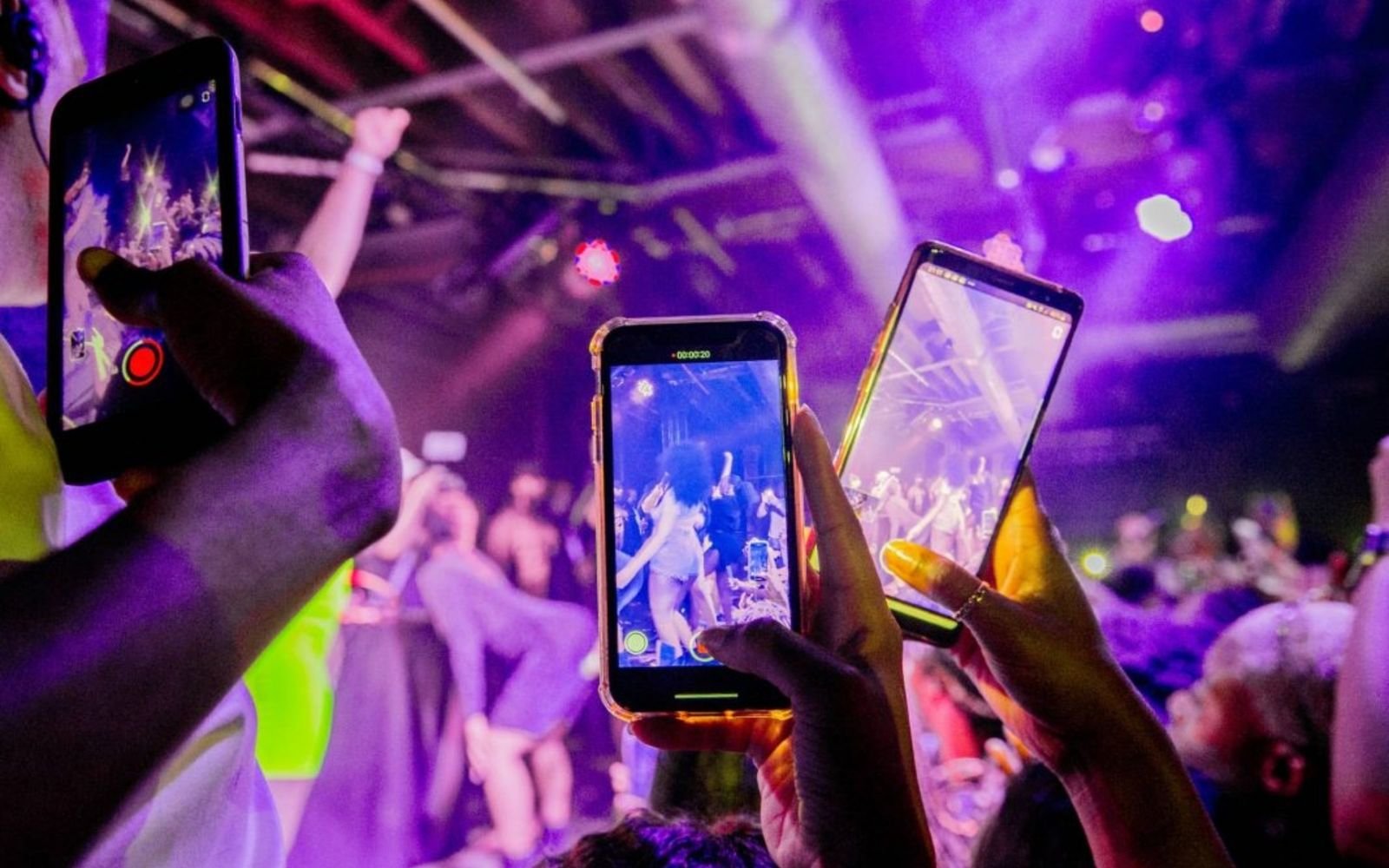
At 3:45 AM inside the Theatre at Hï Ibiza, the sensory assault is overwhelming. Lasers pierce the dry ice, LED panels tower three stories into the rafters, and the sound system flexes with tectonic power. Yet if you gaze across the sea of five thousand bodies packed shoulder-to-shoulder, a strange displacement occurs: thousands of outstretched arms are thrust into the air, holding glowing rectangular glass screens. People are not looking at the selector, nor are they looking at each other. They are looking into a four-inch glass viewfinder, recording a high-definition video of an unreleased drop that will appear six minutes later on TikTok, complete with algorithmic hashtags and digital compression artifacts.
Now, walk sixty paces across the corridor into Hï’s Club Room.
The transition is shocking. The air cools; the lights drop into an ink-black, subterranean gloom punctuated only by atmospheric strobes. There are no vertical pillars of blue light. There are no screens illuminating faces in blue, ghostly pallor. Behind the decks, Damian Lazarus is weaving a serpentine web of hypnotic, slow-burning house. Around him, dancers are closed-eyed, lost in polyrhythms, sweating, bumping hips, moving without choreography or self-consciousness.
At the entrance to this room, security placed small, tamper-evident adhesive stickers directly over the front and rear camera lenses of every attendee's smartphone. In this room, recording is forbidden.
Welcome to the frontline of the most significant cultural battle in modern nightlife: The Phone-Free Rebellion.
For decades, the electronic music dancefloor functioned as a sacred secular space—a sanctuary of collective release, sexual liberation, and sensory anonymity where people vanished from societal surveillance. Over the past decade, however, the relentless rise of smartphone technology and short-form video algorithms transformed nightlife from an intimate, participatory ritual into an open-air content studio.
In 2026, artists and venue curators are staging a revolt. From Damian Lazarus in Playa d'en Bossa and Lane 8’s decade-long This Never Happened movement, to legendary institutions like Fabric London, Pikes Ibiza, and the temple of Berlin techno, Berghain, elite curators are drawing a hard line in the sand. By utilizing magnetic Over Yondr lock-pouches and high-adhesion lens stickers, the underground is fighting to rescue dancefloor intimacy from the clutches of digital voyeurism.
┌─────────────────────────────────────────────────────────────────────────────┐
│                       THE DANCEFLOOR PARADOX (2026)                         │
├──────────────────────────────────────┬──────────────────────────────────────┤
│ THE CONTENT-FIRST DANCEFLOOR         │ THE PHONE-FREE SANCTUARY             │
├──────────────────────────────────────┼──────────────────────────────────────┤
│ Dancers face the DJ booth            │ Dancers face one another or close eyes│
│ Performing for an invisible audience │ Immersed in physical collective flow │
│ Hyper-awareness of personal image    │ Complete deindividuation & freedom   │
│ Premature ID leaks on social media   │ Sonic mystique & exclusive road-tests│
│ Visual static of glowing screens     │ Hypnotic immersion in darkness       │
│ Social validation through posting    │ Emotional catharsis through presence │
└──────────────────────────────────────┴──────────────────────────────────────┘
2. The "Contentification" of Nightlife: Boiler Room, TikTok & The Death of Anonymity
To understand the necessity of this rebellion, one must examine how the culture became so deeply commodified. Nightlife did not become an Instagram stage by accident; it was engineered by platform design and shifting social incentives.
From Hackney Webcams to Global Arenas
In March 2010, Boiler Room began as a gloriously scruffy DIY broadcast from an unheated warehouse in Hackney, London. Founder Blaise Bellville taped a 480p webcam to a brick wall with gaffer tape, capturing a handful of DJs and their closest friends drinking beer and dancing behind the turntable. The original appeal was radical transparency: it pulled back the velvet curtain of the underground, making music fans worldwide feel like fly-on-the-wall participants in a private session.
Fast-forward sixteen years: Boiler Room has transformed into a global stadium spectacle. The camera is no longer a passive witness; it is the absolute focal point of the event. At contemporary 360-degree festival stages, attendees jockey aggressively for position directly behind the mixer, peacocking for the wide-angle camera lens, checking their hair in reflective phone screens, and performing exaggerated reactions designed specifically to cut into viral 8-second clips.
The traditional dynamic of the rave—where the audience faces the sound and creates a circular community of mutual energy—has been reversed. The crowd now faces the broadcast lens, projecting outward toward millions of remote digital spectators.
The "Main Character" Syndrome and TikTok Voyeurism
This stage-managed culture exploded with the hegemony of TikTok and Instagram Reels. In modern club spaces devoid of camera restrictions, every attendee is simultaneously a participant and an unpaid documentary crew.
This environment fosters what sociologists term "The Observer Effect": human beings behave radically differently when they suspect they are being observed. In an era where an awkward dance step, an unguarded facial expression, or a moment of ecstatic abandon can be captured by a stranger and posted to Reddit or TikTok to be mocked by millions, self-consciousness replaces self-expression.
A comprehensive study by nightlife research groups and the Night Time Industries Association (NTIA) revealed a stark paradox: over 72% of active club-goers reported that glowing phone screens actively degrade the atmosphere of a party, yet over 55% admitted to filming live drops themselves. The temptation of social proof—proving to one’s digital network that one possesses the taste, social capital, and financial liquidity to be inside the club—overpowers the innate desire for presence.
3. The Pioneers of the Unplugged Dance: From Berlin Anonymity to Lane 8
The phone-free rebellion did not emerge in a vacuum. It is the formalization of an ethos that has defined the most revered underground spaces for decades.
The Berlin Precedent: Berghain and Club der Visionäre
When Berghain opened in a former East Berlin power plant in 2004, its strict no-photo policy was not a marketing gimmick; it was a foundational defense mechanism. Born out of the legendary gay club Ostgut, Berghain's ethos required total privacy so that marginalized communities, queer ravers, and hedonistic partygoers could express themselves without fear of losing their jobs or facing societal retribution on Monday morning.
Upon crossing the threshold past head doorman Sven Marquardt, every visitor has a colored adhesive sticker applied across their smartphone lenses. Attempting to peel the sticker off or aiming a camera inside results in immediate ejection and a permanent ban. This ironclad boundary gave birth to the legendary mystique of Berlin club culture: what happens within those concrete walls exists strictly in the collective memory of the room.
[ Venue Door / Box Office ]
         │
         ▼
[ Camera Audit & Compliance ]
   ├──► Option A: Tamper-Evident Lens Stickers (Fabric, Pikes, DC-10, Berghain)
   │        └── Lens covered; full phone utility remains (calling, rideshares)
   │
   └──► Option B: Magnetic Yondr Pouches (This Never Happened, Comedy, Concerts)
            └── Phone physically sealed in RF/neoprene sleeve until exit
Lane 8 and the 'This Never Happened' Revolution
In 2016, American melodic house producer Daniel Goldstein, performing under the moniker Lane 8, looked out at his sold-out crowds and recognized an existential threat to dance music. Instead of seeing faces lost in his evocative, emotional arrangements, he saw a wall of illuminated Apple and Android logos.
Goldstein made a radical decision: he launched his record label and touring brand, This Never Happened (TNH), built around an absolute mandate: No phones, no cameras, no filming.
To enforce this at scale—eventually expanding from 500-capacity clubs to 10,000-seat amphitheaters like Red Rocks in Colorado and massive warehouses in London and New York—Lane 8 partnered with Over Yondr.
How Yondr Technology Works
- Entry Protocol: As fans pass ticket scanning, staff hand them a form-fitting, neoprene pouch equipped with a patented magnetic lock mechanism. The attendee slips their smartphone into the pouch, and the latch snaps shut.
- Possession Without Access: The patron keeps physical possession of their device inside their pocket or purse throughout the night, eliminating the liability and logistical nightmare of traditional coat-check phone storage.
- Emergency Unlocking Stations: If an attendee must make an emergency phone call, arrange childcare, or coordinate transportation, designated "Phone Zones" in outer lobbies feature magnetic unlocking pedestals where staff tap the pouch open. Once finished, the phone is locked before the attendee returns to the dancefloor.
- Exit Demagnetization: At the end of the night, attendees tap their pouches against high-speed unlocking bases positioned across the exit doors, freeing their phones in under two seconds.
The cultural impact of Lane 8’s experiment proved revolutionary. What skeptics claimed would destroy ticket sales became the brand’s greatest competitive differentiator. Attendees described entering a transcendent emotional time capsule: people made eye contact, made friends with strangers, and danced from the opening record to the final encore with uninhibited ferocity.
4. The Luxury Pivot: Damian Lazarus, Pikes, and the Ibiza Awakening
For years, mainstream electronic industry executives dismissed phone bans as an eccentricity reserved for gritty Berlin basements or specialized American concept tours. That dismissal collapsed when the phone ban penetrated the global capital of commercial nightlife: Ibiza.
┌─────────────────────────────────────────────────────────────────────────────┐
│                  PHONE RESTRICTION MODELS: STICKER VS. YONDR                │
├───────────────────────┬────────────────────────────┬────────────────────────┤
│ METRIC                │ TAMPER-EVIDENT STICKERS    │ MAGNETIC YONDR POUCHES │
├───────────────────────┼────────────────────────────┼────────────────────────┤
│ Implementation Cost   │ Very Low (€0.03 – €0.08/ea)│ Medium/High (Rental/Op)│
│ Door Throughput Speed │ Extremely Fast (<3 sec)    │ Moderate (5–8 sec)     │
│ Communication Utility │ High (Messaging preserved) │ Zero (Device locked)   │
│ Psychological Barrier │ Moderate (Honor + Bouncers)│ Absolute (Physical lock)│
│ Ideal Venue Format    │ Nightclubs, Terraces, VIPs │ Arena, Amphitheater    │
│ Flagship Adopters     │ Fabric, Pikes, DC-10, Hï CR│ This Never Happened    │
└───────────────────────┴────────────────────────────┴────────────────────────┘
Damian Lazarus and Hï Ibiza’s Saturday Night Division
When Damian Lazarus took over the Club Room at Hï Ibiza for his weekly Saturday residency alongside Black Coffee, he executed a bold curatorial maneuver. While the main Theatre hosted thousands of international tourists capturing pyro drops and visual spectacles on their smartphones, Lazarus turned the Club Room into a pitch-black, phone-free temple of deep, spiritual underground sound.
At the door to the Club Room, staff applied branded stickers over phone cameras, backed by roving floor hosts who gently reminded clubbers to put their devices into their pockets. The result was an immediate sonic and sociological shift. Dancers who felt overwhelmed by the social performance in the main room escaped into the Club Room to actually dance. Lazarus demonstrated that even inside a multi-million-euro mega-club, raw intimacy and sonic immersion remain the ultimate luxury.
Pikes Ibiza: Protecting Freddie Mercury's Legacy
Nowhere was the clash between smartphone culture and authentic hedonism more acute than at Pikes Ibiza. The historic boutique hotel in San Antonio—famed as the playground where Freddie Mercury threw his legendary 41st birthday bacchanal and where Wham! filmed "Club Tropicana"—was rapidly being overrun by Instagram influencers snapping selfies in front of vintage mirrors and filming partygoers inside the 500-capacity club room, Freddie's.
Recognizing that the venue’s soul was eroding, Pikes management instituted an uncompromising, seven-nights-a-week camera ban across the entire estate. Upon arrival, every guest's phone cameras are taped over. Signs throughout the property read bluntly: "Eyes Up, Phones Down."
By eliminating the constant threat of being photographed at the poolside bar or inside the intimate dancefloor, Pikes restored its standing as an authentic playground for rock stars, A-list DJs, and eccentric locals who require absolute digital discretion.
DC-10 and Michael Bibi's Solid Grooves
The movement spread rapidly across the island. At DC-10, Michael Bibi’s juggernaut residency Solid Grooves implemented a full-season no-phone policy across its legendary terrace. For an event driven by driving tech-house and unreleased club weapons, the camera ban eliminated the distracting glare of phones held aloft during bassline drops, returning the terrace to the sweaty, chaotic, dance-first energy that established DC-10's global mythology in the early 2000s.
5. The Psychology of the Dancefloor: Collective Effervescence vs. Digital Voyeurism
Why does banning cameras fundamentally alter how human beings experience music? The explanation lies in deep sociological and neurobiological processes that occur when human bodies synchronize in space.
Durkheim and Collective Effervescence
Over a century ago, pioneering French sociologist Émile Durkheim analyzed the religious rituals of indigenous societies and coined the term "Collective Effervescence." Durkheim observed that when a community gathers in close physical proximity to engage in shared, synchronized actions (chanting, drumming, dancing), individual identities temporarily dissolve into a greater, unified collective consciousness.
Modern neuroscience confirms this phenomenon. Inside a dark, high-fidelity club space, the repetitive pulse of a 122 BPM kick-drum synchronizes the heart rates, breathing patterns, and neural oscillations of hundreds of dancers. This synchronization triggers deindividuation—the healthy, liberating dissolution of the ego. In this state, the brain down-regulates the default mode network (DMN), the neural system responsible for rumination, self-criticism, and social anxiety. Clubbers experience true "flow," an ecstatic release that floods the body with endorphins, dopamine, and oxytocin.
[ Natural Dancefloor State ]
Synchronized BPM ──► Ego Dissolution ──► Deindividuation ──► "Collective Effervescence" (Pure Presence)

[ The Smartphone Interruption ]
Notification / Camera Lift ──► Cognitive Splintering ──► Hyper-Self-Monitoring ──► Total Flow Disruption
The Panopticon of the Camera Lens
The presence of a camera instantly shatters collective effervescence. Drawing from philosopher Michel Foucault’s concept of the Panopticon—a prison architecture where inmates police their own behavior because they never know when they are being watched—the smartphone camera acts as a decentralized surveillance mechanism.
When an attendee sees a stranger aiming a camera in their peripheral vision: 1. The Cognitive Shift: The brain is wrenched out of the emotional, sensory "experiencing self" and forced into the analytical, defensive "evaluating self." 2. Physical Restraint: Dancers instinctively modify their posture, restrict broad limb movements, and suppress uninhibited expressions to avoid looking ridiculous if recorded. 3. Fragmentation of Shared Energy: A dancefloor requires an unbroken reciprocal loop of energy between the crowd and the DJ. When half the crowd raises their arms to record, the kinetic wave of movement collapses into static columns of human tripods.
By physically neutralizing the camera through stickers or pouches, the venue constructs a psychologically safe zone. The subconscious anxiety of digital immortality is lifted. Ravers are liberated to sweat, look disheveled, make eye contact, and surrender completely to the sound.
6. The Sonic Economy: How Producers and Labels Build Mystique Without Leaks
Beyond crowd psychology, the phone-free movement represents a vital commercial and artistic strategy for record labels and producers. In an era of instant digital overexposure, scarcity has become the ultimate luxury currency.
The "TikTok Fatigue" Trap
Consider the lifecycle of an unreleased club ID in the unregulated smartphone era. A headline DJ plays a finished master in May at an open-air festival. Within thirty minutes: * Twelve 4K videos of the drop are uploaded to TikTok and Instagram Reels. * Bedroom ripping channels extract the compressed audio, loop the 8-bar section, and post "Extended AI Edits" to YouTube and SoundCloud. * By the time the label clears the samples, arranges remixes, and schedules the official release for September, the audience has heard the hook 400 times through distorted iPhone microphones.
The novelty is exhausted before the track ever hits Beatport or Spotify. What should have been a six-month commercial lifecycle is burned out in six weeks of algorithmic overexposure (a dynamic we explore extensively in our breakdown of the unreleased ID promo economy).
Curated Mystique as Market Leverage
Elite electronic imprints—from Innervisions (Dixon and Âme) and Keinemusik to Soir Records—understand that great music culture requires shadow and mystique.
When an unreleased record is road-tested exclusively in phone-free rooms like Damian Lazarus’s Club Room or Lane 8’s This Never Happened tour: * The "You Had to Be There" Effect: The record cannot be ripped, Shazamed, or scrubbed on TikTok. It exists only as a haunting acoustic memory carried out of the venue by those who were physically present. * Elevated Cultural Value: Word-of-mouth chatter intensifies. Music enthusiasts debate track titles on forums, scouring setlists on 1001Tracklists. The unreleased master transforms from disposable digital content into an elusive cultural myth. * Controlled Rollouts: The label retains total control over the acoustic presentation of the record, debuting it in pristine 24-bit lossless audio rather than through a phone's clipped limiter.
┌─────────────────────────────────────────────────────────────────────────────┐
│                 THE UNRELEASED ID LIFECYCLE COMPARISON                      │
├──────────────────────────────────────┬──────────────────────────────────────┤
│ UNRESTRICTED SMARTPHONE ENVIRONMENT  │ PHONE-FREE CURATED ENVIRONMENT       │
├──────────────────────────────────────┼──────────────────────────────────────┤
│ 4K crowd rip hits TikTok overnight   │ Zero low-quality audio leaks         │
│ Track burned out before release date │ Sonic anticipation compounds monthly │
│ Algorithm extracts short-term clicks │ Physical myth builds artist cachet   │
│ 15-second drop context only          │ Full arrangement journey preserved   │
│ Devalued commercial impact           │ Explosive launch-day streaming spike │
└──────────────────────────────────────┴──────────────────────────────────────┘
7. The Promoter’s Playbook: Implementing a Phone-Free Experience Without Friction
For event promoters, club operators, and festival directors looking to adopt phone-free protocols, execution is everything. Poor communication or heavy-handed enforcement can alienate ticket buyers and create dangerous bottlenecks at entry.
1. Transparent Ticketing Architecture
Surprise restrictions cause anger. Promoters must embed the phone policy clearly across every consumer touchpoint: * Ticketing Portals (RA, DICE, Shotgun): Include mandatory acknowledgment checkboxes: "I understand this is a phone-free event. Cameras will be taped / locked upon entry." * Pre-Event Automated Mailers: Send logistical emails 48 hours prior detailing why the policy exists, emphasizing that the rule is designed to protect attendees' freedom, privacy, and musical immersion.
2. Optimizing Door Ingestion: Stickers vs. Pouches
Select the hardware that matches your venue footprint: * Venues under 2,000 capacity: Use custom tamper-evident, low-residue camera stickers. Staff can apply front and back stickers in less than three seconds per person, keeping lines moving smoothly. Choose specialized adhesives that leave no sticky residue on glass lenses when peeled off outside. * Large amphitheaters & arenas: Partner with Over Yondr. Deploy multi-lane locking stations equipped with dedicated staff so that the pouching process integrates seamlessly with standard security bag-checks.
3. Establish Dedicated "Phone Sanctuaries"
Never deny attendees the ability to communicate with the outside world. Designate a comfortable, well-lit lounge area near the venue perimeter where attendees can step away, unlock their pouches or step outside the sticker zone, check messages, order rides, and call friends. This removes illicit phone usage from the dancefloor by providing a frictionless, sanctioned alternative.
4. Provide the "Digital Aftercare" Alternative
The primary reason clubbers film shows is the genuine fear of forgetting a beautiful moment. Promoters should alleviate this anxiety by hiring top-tier professional photographers and cinematographers who capture the atmosphere from high angles without flashes or intrusions. * Next-Morning Photo Galleries: Upload high-resolution, artistic crowd and stage imagery to public galleries within 24 hours. Attendees can download and share pristine professional photos to their personal social channels, satisfying their desire for social proof without sacrificing the dancefloor's sanctity.
8. What This Means for Electronic Music in 2027: The Disconnected Luxury Sanctuary
Looking forward toward 2027, the polarization of nightlife will only accelerate. On one side will sit the hyper-commercial "content spectacles"—massive festival installations and commercial mega-clubs engineered explicitly as filming studios for generative AI feeds and social media feeds.
On the other side, the phone-free sanctuary will emerge as the defining hallmark of elite, discerning club culture.
We are already witnessing high-end hospitality brands, private members' clubs, and luxury retreats across Tulum, Mykonos, Ibiza, and Bodrum adopting phone-free dancefloor policies as standard operating procedure (a movement mirroring the rise of bohemian luxury and shamanic club sociology). For affluent, culturally literate music enthusiasts, the ability to unplug completely without fear of digital surveillance is no longer an inconvenience—it is the ultimate luxury experience.
Furthermore, forward-thinking venues are beginning to experiment with architectural and technological defenses: * Faraday Cage Engineering: Boutique clubs incorporating passive RF-attenuating mesh in dancefloor walls to naturally suppress cellular data signals while leaving emergency radio frequencies untouched. * Infrared Floor Illumination: Testing invisible infrared floodlights that wash dancefloors in light that is completely invisible to the human eye but blurs and overexposes standard CMOS smartphone camera sensors, rendering unauthorized video recordings unusable.
The dancefloor was born as an escape from the machinery of the modern world. In a world dominated by relentless digital tracking, algorithmic notifications, and performative social capital, the darkest, most disconnected room in the city is where true freedom lives.
Key Takeaways
- The Dancefloor Paradox Is Real: While over 70% of clubbers recognize that illuminated smartphone screens destroy club atmosphere, social proof incentives drive a majority to film anyway.
- Phone Bans Foster "Collective Effervescence": Removing cameras eliminates the Panopticon effect, reducing self-consciousness and allowing dancers to achieve ego-loss, synchrony, and neurochemical flow states.
- Dual Implementation Technologies: Nightclubs rely on low-cost, high-speed tamper-evident camera stickers (Fabric, Pikes, DC-10, Berghain), while large-scale amphitheaters utilize magnetic locking neoprene sleeves (Over Yondr for Lane 8's This Never Happened).
- Damian Lazarus Brought the Shift to Mainstream Ibiza: By transforming Hï Ibiza’s Club Room into a dark, phone-free space, Lazarus established that authentic dancefloor intimacy remains the ultimate VIP experience even in global commercial hubs.
- Sonic Scarcity Protects Track Lifecycles: Keeping unreleased IDs out of 15-second TikTok video loops prevents premature audience burnout, building prolonged anticipation and high commercial value for record rollouts.
- Disconnection Is the New Luxury: As nightlife moves toward 2027, high-end electronic clubs and boutique open-air retreats are positioning total digital privacy as a premium cultural status symbol.
FAQ
How do camera stickers work at clubs like Fabric and Berghain?
Upon entry, door staff place small, specialized low-residue adhesive stickers directly over both the front-facing and rear camera lenses of your smartphone. The stickers are tamper-evident; attempting to peel them off leaves a visible patterned void mark. Club security and floor hosts monitor the dancefloor, and any attendee seen with an uncovered lens or using a camera is subject to immediate removal from the venue.
Can attendees still use their phones during an emergency at a Yondr-locked event?
Yes. During events using Over Yondr magnetic pouches, attendees retain physical possession of their devices at all times. If a guest needs to send a text, answer an urgent call, or check ride-share services, they can visit designated "Phone Zones" located in outer lobbies or smoking terraces, where staff instantly unlock the pouch using magnetic pedestals.
Why are unreleased tracks harmed by being filmed on TikTok?
When an unreleased ID is recorded on smartphone cameras and uploaded to TikTok, it is often circulated in low-fidelity, distorted audio formats across thousands of short clips. By the time the artist and label officially release the master weeks or months later, algorithmic overexposure has exhausted the audience's novelty and emotional appetite, severely diminishing first-week streaming impact and Beatport momentum.
Are artists allowed to film or have official photographers in phone-free clubs?
Yes. Most venues operating phone-free policies retain vetted, professional in-house media teams. These photographers and cinematographers operate under strict editorial guidelines—typically shooting from elevated perches or utilizing low-light lenses without intrusive flashes. Venues release curated image galleries post-event so attendees can save and share visual memories without disrupting the live dancefloor experience.