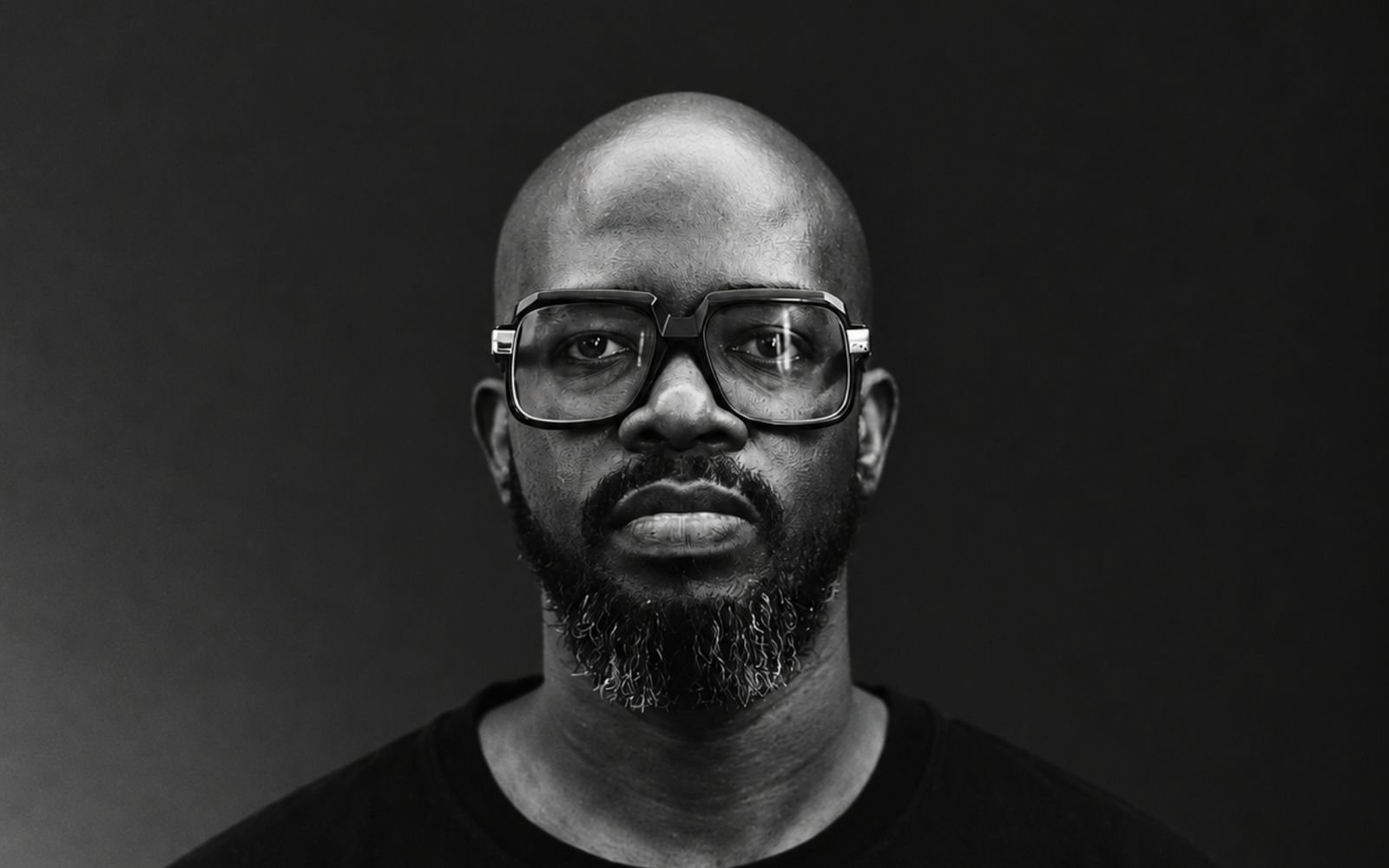
Soir Records

1. The Garden and the Township: The Global Triumph and the Continental Hearth
On the evening of October 7, 2023, Nkosinathi Maphumulo—known universally as Black Coffee—walked onto the stage of New York City’s Madison Square Garden. Dressed in a sharply tailored ivory tuxedo, backed by a 12-piece string orchestra and flanked by long-time South African collaborators including Bucie, Msaki, Shoba, and the amapiano juggernauts Major League DJz, he commanded a sold-out arena of 19,000 international ticket-holders. It was the first time in history that a South African solo headline DJ and producer had achieved full-capacity status at the most storied indoor arena on earth.
To the mainstream Western music press, this spectacle was hailed as the sudden arrival of African electronic dance music into the institutional pantheon of global pop culture. It was framed as an exotic crossover—a cinematic Cinderella story tracing a line from the dusty streets of Umlazi and Mthatha directly to midtown Manhattan.
Yet that narrative fundamentally misinterprets the economic and cultural physics of the global dancefloor.
Black Coffee’s Madison Square Garden triumph was not the starting gun of an African electronic music boom; it was the high-altitude corporate dividend of an extraordinarily mature, self-sustaining, and ferocious multi-million-dollar domestic ecosystem that has operated independently across the African continent for over three decades. Eight thousand miles away from Manhattan, in the sweat-drenched, sub-bass-loaded concrete expanse of Zone 6 Venue in Soweto, the packed open-air terraces of Braamfontein, the coastal open-air amphitheatres of Cape Town, and the pulsating VIP waterfront lounges of Victoria Island and Lekki in Lagos, electronic music is neither a seasonal summer trend nor an exotic playlist novelty. It is a dominant commercial juggernaut, a social religion, and the primary cultural currency of the world’s youngest and fastest-growing population.
For decades, the global dance music economy obeyed a strictly colonial hierarchy: Western metropolises—London, Berlin, Chicago, Detroit, and Ibiza—served as the creative R&D hubs and intellectual property owners, while the global South was treated merely as a passive consumer market or a safari outpost for European touring acts. In 2026, that architecture has collapsed.
From the syncopated cross-rhythms of Johannesburg 3-Step to the thunderous low-end frequencies of South African Amapiano and the polyrhythmic ancestral house tracks emanating from Lagos and Nairobi, the African continent is now dictating the sonic grammar, the commercial momentum, and the aesthetic future of global club culture. However, beneath the global headlines, sold-out European mega-festivals, and Grammy ceremonies lies a bitter economic reality: a persistent, structural disparity between the African originators who pioneer the sound and the Western commercial machinery that profits from it.
2. The Economic Disparity: African Originators vs. The European Touring Cartel
To understand the financial realities of modern Afro House, one must examine the profound economic chasm that divides African music creators from the European and American touring acts who play their records across the global jet-set circuit.
THE GLOBAL AFRO HOUSE CAPITAL EXTRACTION CYCLE

[Soweto / Durban / Lagos Home Studios]
   │  • Creators produce 3-Step, Amapiano & Afro Tech on cracked FL Studio
   │  • Unreleased dubplates traded via WhatsApp groups & private SoundCloud links
   ▼
[European / Western A-List Touring DJs]
   │  • DJs acquire exclusive IDs, road-testing them in Ibiza, Tulum, and Mykonos
   │  • Records chart #1 on Beatport; signed to European indie-majors
   ▼
[The Re-Importation Feedback Loop]
   │  • European DJs booked to headline South African / Nigerian boutique festivals
   │  • Promoters pay €20,000 – €50,000+ in hard currency (EUR/USD) plus flight buyouts
   ▼
[The Domestic Financial Squeeze]
      • Local innovators who authored the sound booked as afternoon support
      • Paid R15,000 – R50,000 ZAR (€750 – €2,500) under local budget constraints
The Booking Fee Gulf and Currency Asymmetry
The fundamental engine of inequality on the international dancefloor is the currency gap. Top-tier European and North American touring DJs routinely quote their performance fees in hard currencies—Euros, British Pounds, or US Dollars. When an elite European DJ commands a mid-tier international fee of €25,000 to €45,000 for a two-hour headline set, that figure converts to roughly R500,000 to R900,000 South African Rand, or over 40 million Nigerian Naira (NGN).
When domestic festival promoters in Johannesburg, Cape Town, or Nairobi assemble their operational budgets, booking a single European headliner frequently absorbs up to 40% to 60% of the entire talent allocation. The European headliner demands first-class international airfares, luxury boutique hotel suites, secure ground transport, and comprehensive rider expenses.
To balance the books, domestic promoters are forced to compress the fees allocated to local South African, Kenyan, or Nigerian artists. Groundbreaking African producers—the very originators whose self-released dubplates and viral tracks form the peak-time highlights of that European headliner’s USB stick—are frequently relegated to opening or mid-afternoon slots. They are paid domestic rates ranging from R15,000 to R60,000 ZAR (approximately €750 to €3,000), carrying zero currency hedging against spiraling local inflation, rolling power grid blackouts (loadshedding), and soaring equipment import tariffs.
| Dimension | Tier-1 European Touring DJ (in Africa) | Homegrown African Pioneer / Innovator |
|---|---|---|
| Contract Currency | Hard Currency (EUR / USD / GBP) | Volatile Local Currency (ZAR / NGN / KES) |
| Typical Headline Fee | €20,000 – €60,000+ per performance | R20,000 – R100,000 ZAR (€1,000 – €5,000) |
| Logistical Burden on Promoter | International long-haul flights, 5-star suites, rider buyouts | Minimal local travel, self-managed accommodation |
| Share of Festival Talent Budget | 40% – 60% allocated to 1–2 international imports | 40% divided across 15–25 local support acts |
| Mobility & Visa Freedom | Visa-on-arrival or instant e-visa across Africa | Crushing Schengen / UK visa applications & delays |
| IP Monetization Pipeline | Major European booking agency & global publishing admin | Often uncollected black-box royalties; domestic societies |
The "Fortress Europe" Visa Wall
The economic disparity is magnified by mobility restrictions. While a passport holder from Germany, France, or the United Kingdom can land at O.R. Tambo International Airport in Johannesburg, Cape Town International, or Murtala Muhammed International Airport in Lagos with an instantaneous e-visa or visa-on-arrival, an African electronic artist attempting to tour Europe faces what the industry calls the "Schengen Paper Wall."
Securing a Schengen or UK performance visa requires an African DJ to submit months of invasive personal bank statements, biometric appointments booked months in advance via private visa-monopoly contractors, certified proof of domestic property ownership to guarantee they will not defect, and non-refundable application fees that can run into thousands of dollars. Promoters in London, Amsterdam, and Berlin routinely cancel bookings for African underground artists when visa processing windows unexpectedly stretch from three weeks to three months.
Consequently, while European DJs freely exploit the African club market during the European winter (November to February), African producers are systematically prevented from capitalizing on the European summer festival boom (June to September). This preserves an artificial labor barrier that protects Western DJ booking dominance.
The Re-Importation Loop
The most frustrating dynamic for African creators is what cultural theorists call the Re-Importation Loop. An unreleased track produced by a bedroom producer in Pretoria or Durban is shared among local peers on WhatsApp. A visiting European selector hears it at a 5:00 AM township gathering or receives it via an insider promo swap, plays it during an Ibiza residency or a Cercle live stream, and watches it ignite millions of TikTok and Shazam searches.
European independent majors then step in to license the track for a nominal flat advance. Within six months, European acts release carbon-copy edits, chart at #1 on Beatport's Afro House Top 100, and are subsequently re-booked to headline luxury South African venues like Cabo Beach Club in Cape Town or Altitude Beach in Johannesburg—marketed back to South African audiences as the "sophisticated European ambassadors" of the very sound South Africa created.
3. The Festival Gold Rush: Afro Nation, Diaspora Capital & The Lagos Reality Check
Nowhere is the collision between international capital and domestic reality more stark than in the stadium-scale live festival sector. Over the past five years, the global demand for African rhythms has turned large-scale festival curation into an international gold rush.
THE DIASPORA FESTIVAL DILEMMA: OFFSHORE EXTRACTION VS. DOMESTIC INFRASTRUCTURE

[Afro Nation Portugal (Portimão)]
  ├── 40,000+ attendees from 140+ countries
  ├── Millions injected into the Portuguese Algarve hospitality sector
  └── High ticket prices ($350–$600 USD) inaccessible to 99% of continental fans

VS.

[Domestic African Festival Ecosystems]
  ├── Shimza’s Kunye: 100% African lineups selling out 10,000+ arenas in Joburg
  ├── Desiree’s MMiNO: Tiered equity ticket pricing protecting local clubbers
  ├── Obi’s House (Lagos): High-energy weekly grassroots movement in Lekki
  └── The Lagos Lesson: Why imported Western festival models stumble on local realities
The Portimão Offshore Powerhouse
The flagship commercial expression of this movement is Afro Nation Portugal, held annually on the golden sands of Praia da Rocha in Portimão, Portugal. Welcoming upwards of 40,000 festival-goers from more than 140 nations across the globe, Afro Nation has established itself as the premier summer gathering for the worldwide Black and African diaspora.
With dedicated stages such as the Piano People Stage showcasing Amapiano and Afro House pioneers alongside Afrobeats royalty, the event represents an economic triumph: tens of millions of euros pumped into local Algarve hotels, restaurants, and airlines. Yet it also underscores a telling geographic paradox: the world's most lucrative and celebrated mass gathering of contemporary African musical culture takes place on the southern coast of mainland Europe, where tickets priced between €250 and €500 make attendance virtually inaccessible to everyday youth living on the African continent itself.
The Reality Check of Afro Nation Lagos
The tensions inherent in attempting to export that Western mega-festival model back to the African mainland became painfully visible in late 2023. Organizers announced an ambitious continental flagship: Afro Nation Lagos, scheduled for December 19–20, 2023, at the historic 55,000-capacity Tafawa Balewa Square (TBS) in Lagos, Nigeria. The lineup promised heavyweights including Burna Boy, J Hus, and Asake.
Yet just weeks before the event was scheduled to open its gates, the festival was abruptly cancelled. In an official statement, organizers conceded that they were unable to deliver a show that met the operational and production quality that Nigerian audiences deserved, promptly refunding all tickets.
Industry insiders recognized the cancellation not as a failure of musical interest, but as an acute encounter with the severe logistical friction of operating within emerging urban environments: * The Infrastructure Deficit: Running a world-class arena festival in Lagos requires building a self-contained municipal city from scratch. Promoters must secure industrial megawatt diesel generators to overcome national power grid instabilities, negotiate complex private security and traffic corridors across the congested Lekki-Ikoyi toll corridor, and construct staging and audio rigs imported from South Africa or Europe due to local hardware supply limitations. * Foreign Exchange Volatility: With ticket sales priced in depreciating Nigerian Naira (NGN) against artist fees and staging production contracts pegged in US Dollars, dramatic currency fluctuations can erode a promoter’s profit margins overnight. * The Corporate Disconnect: Attempting to impose a British-style corporate festival template onto the organic, decentralized nightlife ecology of Lagos proved that foreign event conglomerates cannot simply parachute into Africa without deep, long-standing local institutional partnerships.
The Triumphant Domestic Counter-Models: Kunye, MMiNO, and Obi’s House
Where foreign mega-conglomerates stumble, domestic African-led platforms are thriving by engineering models custom-built for local realities.
- Shimza’s Kunye Movement: Founded by South African DJ and producer Shimza, Kunye (a Xhosa word meaning "Together") began as an independent record label and streaming showcase designed to bring South African Afro Tech and House music into the international spotlight. Rather than relying on imported European acts to sell tickets, Kunye stages massive, 10,000-capacity open-air events at venues like Johannesburg’s Constitution Hill and Pretoria’s botanical gardens with lineups composed entirely of African talent. Kunye proved to corporate sponsors and international booking agents that domestic artists alone can drive arena-level box office success.
- DJ Desiree’s MMiNO and Radical Equity Pricing: In Cape Town—a city where historical gentrification and international tourist wealth often push working-class Black South Africans out of prime nightlife spaces—South African DJ and producer Desiree launched the MMiNO festival. MMiNO pioneered a radical "equity pricing framework": international visitors and tourists holding foreign bank accounts pay an international market rate for tickets, which directly subsidizes heavily discounted, affordable tickets for local South African clubbers. It is a deliberate economic intervention designed to ensure the community that birthed the sound is not priced out of its own dancefloor.
- The Lagos Club Underground: Obi’s House and Element House: In Nigeria, electronic club culture does not live in static festival parks; it lives in dynamic, high-turnover weekly movements. Every Monday night, Obi’s House, hosted by DJ Obi at Hard Rock Cafe Lagos in Victoria Island, brings together thousands of young Nigerians for a marathon six-hour electronic and Afrobeats set that generates millions of impressions across social channels. Simultaneously, collectives like Spektrum’s Element House have sustained a dedicated underground house and tech-house residency in Lagos for years, proving that Nigeria’s appetite for four-on-the-floor rhythms goes far beyond mainstream pop radio.
4. The Institutional Crown: The Grammy African Category & The Double-Edged Sword
In the traditional music industry, nothing accelerates booking fees, corporate brand sponsorship, and sync licensing values like institutional recognition from the Western recording establishment. Over the past five years, African electronic and rhythmic music has finally forced its way into the halls of the US National Academy of Recording Arts and Sciences.
The Trailblazer: Black Coffee’s 64th Grammy Win
The modern watershed occurred at the 64th Annual Grammy Awards in April 2022, when Black Coffee won the award for Best Dance/Electronic Album for his LP Subconsciously.
THE INSTITUTIONAL RECOGNITION TIMELINE

[April 2022: The Dance Mainstream Breakthrough]
  • Black Coffee wins "Best Dance/Electronic Album" at the 64th Grammys for 'Subconsciously'
  • Proves an African dance producer can beat global titans in the primary genre category
  │
  ▼
[February 2024: Inauguration of Best African Music Performance]
  • 66th Grammy Awards establishes dedicated category
  • Tyla makes history winning with Amapiano-pop single "Water"
  • Category recognizes: Afro House, Amapiano, Afrobeats, Alte, Genge, Kizomba
  │
  ▼
[2025–2026: Commercial Synchronization Explosion]
  • African electronic composers command $100k+ sync fees from Hollywood / Netflix
  • The Debate: Does a dedicated category celebrate African art, or act as decorative containment?
Black Coffee’s victory was monumental because he did not compete in a quarantined "Global" or "World Music" category. He competed in—and won—the premier electronic category, defeating mainstream Western pop-dance heavyweights including Marshmello, Illenium, Major Lazer, and Ten City. It delivered undeniable commercial proof that an album anchored in South African deep house sensibilities could dominate global electronic music's most prestigious commercial award.
The 66th Grammys: The Birth of "Best African Music Performance"
Recognizing the undeniable commercial momentum of the continent, the Recording Academy officially introduced the Grammy Award for Best African Music Performance at the 66th Annual Grammy Awards in February 2024. The category was explicitly written to honor the rich regional expressions of the continent, encompassing Afrobeats, Amapiano, Afro House, Alte, Highlife, Fuji, and Ethio-Jazz.
The inaugural award was claimed by 22-year-old South African sensation Tyla for her global viral smash "Water", an Amapiano-infused pop anthem characterized by rolling log-drum basslines and R&B melodies. Tyla won the award against a formidable roster of Nigerian Afrobeats titans, including Burna Boy ("City Boys"), Davido featuring South African amapiano producer Musa Keys ("Unavailable"), Ayra Starr ("Rush"), and Asake & Olamide ("Amapiano").
The Economic Upside vs. The "Decorative Ghetto"
The commercial impact of this Grammy category has been swift: 1. Sync Licensing Valuations: Synchronization fees for African composers have skyrocketed. Film and television supervisors at Netflix, HBO, Disney, and EA Sports (specifically the EA FC gaming soundtrack) now actively commission original Afro House and Amapiano compositions, with sync fees for master and publishing rights leaping from low-four-figure sums to $50,000 to upwards of $150,000 USD per placement. 2. Publishing Advance Multipliers: Western major publishers (Sony Music Publishing, Warner Chappell, Universal Music Publishing Group) established aggressive talent scouts in Lagos and Johannesburg, signing young electronic producers to unprecedented global publishing deals.
However, the category has sparked vigorous debate among African intellectuals and artists. Critics argue that creating a dedicated, single category for an entire continent of 54 distinct nations, 1.4 billion people, and dozens of disparate genres is an act of decorative containment.
By grouping South African electronic 3-Step, Nigerian Fuji-pop, Kenyan drill, and Ghanaian Highlife into a single ballot box, the Grammys risk walling African music off from the prestigious "General Field"—Record of the Year, Song of the Year, and Album of the Year—and sparing mainstream American and European artists from having to compete directly with African innovators.
5. The Streaming Engine: Data Deserts, Telco Bundling, and the Battle for DSP Hegemony
While live touring provides immediate cash flow for African DJs, the long-term capitalization of the African electronic music economy depends on digital streaming. According to data from the IFPI Global Music Report, Sub-Saharan Africa has consistently ranked as the fastest-growing recorded music region in the world, regularly posting year-over-year revenue growth rates between 15% and 25%.
More remarkably, streaming accounts for an extraordinary 97.5% of all recorded music revenues in the region. Yet the mechanics of the African streaming ecosystem operate under completely different rules than in North America or Western Europe.
THE FLOW OF REVENUE IN THE SUB-SAHARAN STREAMING ECOSYSTEM

                    [ African Smartphone Consumer ]
                                  │
          ┌───────────────────────┴───────────────────────┐
          │ (The Data Cost Barrier)                       │ (The Payment Gateway Barrier)
          ▼                                               ▼
[ Telco Data Bundle Deals ]                       [ Mobile Money Infrastructures ]
  • MTN, Airtel, Vodacom, Safaricom                 • M-Pesa (East Africa)
  • Zero-rated streaming partnerships               • Flutterwave / Paystack (Nigeria)
  • Daily & weekly micro-subscriptions              • MTN MoMo (West & Central Africa)
          │                                               │
          └───────────────────────┬───────────────────────┘
                                  ▼
                   [ Digital Service Providers (DSPs) ]
          ┌───────────────────────┴───────────────────────┐
          ▼                                               ▼
[ Homegrown Dominance: Boomplay & Audiomack ]   [ Global Expansion: Spotify & Apple Music ]
  • 100M+ users across West & East Africa        • High-end urban demographic (Joburg, Lagos)
  • Pre-installed on Transsion devices (Tecno)   • Global playlist ecosystem (Mint, African Heat)
  • Ad-supported offline caching                 • Higher ARPU, but limited mass-market reach
          │                                               │
          └───────────────────────┬───────────────────────┘
                                  ▼
             [ The Brutal ARPU Payout Disparity ]
  • Western DSP Payout: $0.0030 – $0.0045 per stream
  • African Telco/Ad Tier Payout: $0.0004 – $0.0012 per stream
  • Outcome: 1,000,000 African streams = $500 – $1,200 USD (Gigging remains mandatory)
The Battle for Platform Hegemony: Boomplay vs. Spotify
The digital battleground across Africa is divided between entrenched homegrown platforms and aggressive international entrants:
- Boomplay: Developed by Transsnet Music Limited (a joint venture between Transsion Holdings and NetEase), Boomplay has quietly become a digital powerhouse across Sub-Saharan Africa, with over 100 million active users. Boomplay’s competitive advantage was structural: Transsion manufactures the smartphone brands that dominate African retail—Tecno, Infinix, and Itel—which together command over 40% of the African smartphone market. Boomplay comes pre-installed on these handsets. Crucially, Boomplay was built specifically for African connectivity realities, allowing users to download and cache tracks to SD cards while on Wi-Fi, minimizing cellular data consumption.
- Audiomack: Operating on a creator-first, freemium model, Audiomack became the primary distribution vehicle for street-level Afro House, Street Pop, and Amapiano in Nigeria and Ghana. Its seamless, zero-friction upload process allowed bedroom producers to bypass formal aggregator distribution hurdles, turning the platform into the premier discovery ground for A&Rs.
- Spotify Africa & Apple Music: While Spotify and Apple Music dominate headlines, their paid subscription models face strict demographic ceilings. In markets like South Africa, Spotify has experienced massive traction (with South Africa generating approximately 78% of all recorded music revenues in Sub-Saharan Africa). However, across Nigeria, Kenya, and Ghana, global DSPs remain predominantly confined to middle- and upper-class urban demographics who possess disposable income and international debit cards.
The Structural Bottlenecks: Data Tariffs and Micro-Billing
The expansion of African music streaming is constrained by two structural realities: 1. The Cost of Data: Relative to average monthly wages, mobile broadband data tariffs in Sub-Saharan Africa remain among the highest in the world. Streaming a high-resolution lossless audio file on Apple Music can cost an average user more in mobile data credits than the cost of a daily meal. To survive, DSPs must negotiate direct partnerships with telecommunication giants—such as MTN, Airtel, Vodacom, and Safaricom—to offer "zero-rated" data bundles, where users purchase daily or weekly music passes that do not deduct from their regular data allowances. 2. The Average Revenue Per User (ARPU) Chasm: In Western markets, a premium Spotify subscriber pays $11.99 per month, generating an average payout of approximately $0.003 to $0.004 USD per stream. In Sub-Saharan Africa, where DSPs offer localized subscription tiers priced between $1.50 and $3.00 per month—and where over 85% of streaming occurs on ad-supported or telco-bundled tiers—the effective payout per stream plummets to $0.0004 to $0.0012 USD.
For an independent South African or Nigerian producer, generating one million streams on domestic DSP platforms often yields as little as $500 to $1,200 USD. Consequently, streaming in Africa acts primarily as a marketing mechanism to fuel weekend performance bookings, corporate endorsements, and private event gigs, rather than serving as a self-sustaining royalty income.
6. The Reverse Flow of Sound: How Africa Rewrote Western Club Culture
For nearly half a century, the flow of electronic dance music followed a predictable geographic trajectory: Western musical movements were invented in the urban centers of the Global North and subsequently exported outward.
In the 2020s, that flow experienced a historic reversal. The creative epicenter of the global electronic dancefloor shifted south of the Sahara.
THE EVOLUTION OF THE CONTINENTAL SONIC SIGNATURE

[Kwaito & Ancestral House (1990s–2010s)]
  ├── Slowed-down Chicago house grooves (110–115 BPM)
  ├── Zulu, Sotho, and Xhosa vocal poetry
  └── Pioneers: Oskido, DJ Fresh, Black Coffee, Culoe De Song
  │
  ▼
[The Amapiano Log-Drum Revolution (2018–2023)]
  ├── Percussive baseline slide using Korg M1 / Fruity DX10 FM synth
  ├── Jazz keys, shaker cascades, and township whistle calls
  └── Architect: Kabza De Small, DJ Maphorisa, Vigro Deep
  │
  ▼
[The 3-Step & Afro Tech Transformation (2024–2026)]
  ├── Thakzin drops the 4th kick: (1 - 2 - 3 - [rest]) syncopation
  ├── Cinematic analog pads meet deep Gqom tension & African brass
  └── Leaders: Thakzin, Atmos Blaq, Dlala Thukzin, Caiiro, Sun-EL Musician
The Anatomy of 3-Step: Thakzin and the Death of the Rigid 4/4
The most critical rhythmic breakthrough in mid-2020s electronic music is the emergence of 3-Step. For four decades, the standard house music rhythm was defined by a rigid four-on-the-floor kick pattern: four evenly spaced quarter notes per bar (1 - 2 - 3 - 4).
Johannesburg producer and DJ Thakzin (Thabang Mathebula) deliberately dismantled this four-decade-old dogma. By systematically muting the fourth kick drum in the measure, Thakzin created an intentional rhythmic void—a breathless, suspended gap that propels the dancer into a dynamic, rolling, three-step lurch.
Tracks like Thakzin’s breakout anthem "The Magnificent Dance", followed by masterworks like "Possessed" and his collaborative remixes with Atmos Blaq and Dlala Thukzin, fused the dark, percussive weight of Durban Gqom with the warm harmonic pads of deep Afro Tech and the sliding bass frequencies of Amapiano.
By 2025 and 2026, 3-Step ceased to be a South African secret. European techno and house selectors—from Berlin's Keinemusik collective (Adam Port, &ME, Rampa) to Solomun and Tale of Us—began structuring peak-time festival sets around the syncopated 3-Step kick pattern, recognizing that it injected a fresh, kinetic sensuality into dancefloors exhausted by monotonous 4/4 loops.
The Log Drum Hegemony
Simultaneously, the South African Amapiano "log drum"—pioneered by Pretoria and Soweto producers using software synthesizers like the Korg M1 organ and Fruity DX10 FM plugin—has become the single most influential bass element in modern music.
The low-frequency pitch bend of the log drum is no longer confined to African clubs; it has been integrated into global pop, rap, and European tech-house. When Drake released his dance-infused album Honestly, Nevermind in 2022—enlisting Black Coffee as an executive producer—and followed it with amapiano-influenced releases, it confirmed what dance music insiders already knew: the rhythmic intelligence of the township had become the premier sonic language of global pop.
From Diplo’s Major Lazer exploring African electronic collaborations to French, British, and Spanish producers flooding Beatport with Afro House records, the sound of the modern club is unmistakably African. Yet the fundamental challenge remains: how do African producers convert this sonic influence into sovereign, generational wealth?
7. The African Producer Playbook: Sovereign Ownership and Global Licensing
For African producers operating in Johannesburg, Lagos, Nairobi, or Accra—as well as diaspora artists collaborating with African creators—navigating the global music business requires an aggressive, protective strategy to avoid exploitation.
+---------------------------------------------------------------------------------------------------+
|               THE AFRICAN INDEPENDENT PRODUCER CONTRACT VERIFICATION PROTOCOL                     |
+===================================================================================================+
| [ ] Master Ownership Retention: Reject total buyout contracts from foreign touring DJs and        |
|     labels. Insist on a 50/50 Master split or a licensed term (5–7 years) with reversion.        |
|                                                                                                   |
| [ ] Direct Split-Sheet Execution: Ensure all vocalists, session players, and co-producers sign    |
|     legally binding split sheets prior to sharing WAV files or dubplates with touring DJs.        |
|                                                                                                   |
| [ ] Global Publishing Administration: Affiliate directly with a major international CMO/PRO       |
|     (such as PRS, BMI, ASCAP, or SACEM) or use a global publishing administrator (Songtrust,     |
|     Kobalt) alongside domestic societies (SAMRO, MCSN) to capture international public royalties. |
|                                                                                                   |
| [ ] Neighboring Rights Registration: Register all master recordings with SAMPRA (South Africa),   |
|     PPL (UK), and SoundExchange (US) to collect performance royalties from club and radio play.   |
|                                                                                                   |
| [ ] DJ-Play Tracking Verification: Submit high-priority club releases to DJ Monitor and Pioneer    |
|     KUVO to ensure track plays on international festival stages (Tomorrowland, Ultra, Ibiza)      |
|     are logged and paid out through European collection societies.                                |
|                                                                                                   |
| [ ] Stems and Instrumental Protection: Never provide uncredited "production packages" or dry      |
|     vocal stems without upfront advance fees, non-disclosure agreements, and registered master splits.|
+---------------------------------------------------------------------------------------------------+
1. Dismantling the "Work-for-Hire" Trap
The most pervasive form of exploitation in African dance music involves Western touring DJs offering small upfront cash advances (often $500 to $2,000 USD) to young African producers in exchange for full "work-for-hire" buyouts of unreleased beats. The Western DJ attaches their name as the primary artist, slaps the track onto Beatport, books tens of thousands of dollars in international gigs off the momentum of the track, while the African producer receives zero backend royalties, zero publishing credits, and zero career equity.
Producers must enforce a strict policy: no full master buyouts. If an international DJ wants to release a collaboration, the African creator must be credited as a primary or featured artist, retain at least 50% of the master copyright, and hold 50% of the publishing share.
2. Fixing the Black-Box Royalties Crisis
Hundreds of millions of dollars in performance royalties generated by African tracks played in European nightclubs and festivals never reach their African creators. This capital vanishes into international "black boxes"—unclaimed royalty pools held by European collection societies (such as GEMA, SACEM, and Buma/Stemra).
Because many African producers are either unregistered or registered only with under-resourced domestic collection societies (such as SAMRO in South Africa or COSON/MCSN in Nigeria) that lack aggressive reciprocal bilateral tracking agreements with Europe, royalties generated when a DJ plays their record at Amnesia Ibiza or Tomorrowland never cross the Mediterranean.
African producers must dual-register their works with global publishing administrators or direct-affiliate with international performance rights organizations (PROs) capable of extracting every cent from global festival play logs.
8. What This Means for You in 2027: Sovereign Infrastructure and The New African Electronic Era
As we approach 2027, the global dance music economy is entering a decisive transition. The era in which African producers served merely as uncredited ghost producers, exotic sample sources, or opening acts for European touring DJs is ending. The future belongs to sovereign African infrastructure.
The Rise of Continental Super-Venues and Booking Networks
Across Africa, a new generation of local entrepreneurs, promoters, and artists is constructing venues and event platforms designed to rival Ibiza, London, and Miami: * In South Africa: Venues like Cabo Beach Club and The Grand Africa Cafe & Beach in Cape Town, alongside Zone 6 Venue and Altitude Beach in Johannesburg, are commanding the highest production and acoustic standards on the continent, proving that domestic nightlife commands premium VIP table economies. * In Nigeria: The beachfront strip along Oniru, Lekki, and Victoria Island—anchored by venues like Moist Beach Club, W Bar, and the rapid expansion of curated warehouse raves—is creating a multi-million-dollar weekly electronic economy that caters to both local elites and the affluent global Nigerian diaspora returning home during the annual "Detty December" festivities. * In Kenya: Nairobi’s electronic underground—led by venues like The Alchemist and Muze, and powered by pioneering platforms like Gondwana KE (founded by Suraj and Euggy)—has established East Africa as an indispensable hub for deep, organic Afro House showcases.
The Next Creative Vanguard: Radical Pan-African Autonomy
The forward-looking artists of 2027 are no longer waiting for a validation call from an Ibiza residency or a major label in London. They are creating independent, pan-African touring circuits that route directly between Johannesburg, Nairobi, Lagos, Accra, and Cairo—bypassing Europe entirely.
By mastering digital direct-to-consumer tools, establishing independent African-owned record labels, utilizing mobile money payment rails, and fiercely defending their intellectual property rights, African electronic music creators are reclaiming their heritage. Africa is not a novelty trend on the periphery of Western dance music; Africa is the beating heart, the rhythmic foundation, and the economic future of the global dancefloor.
Key Takeaways
- The Continental Engine: Black Coffee’s historic sold-out performance at Madison Square Garden was not an overnight anomaly; it was the global commercial dividend of a self-sustaining, multi-decade domestic electronic music economy rooted in South Africa and Nigeria.
- The Booking Fee Disparity: A severe financial imbalance persists on the dancefloor: European touring DJs command tens of thousands of Euros in hard currency for African festival slots, while the African innovators who pioneer the sound are often paid low domestic rates in volatile local currencies (ZAR, NGN).
- The Mobility Barrier: While European artists move freely across Africa on visas-on-arrival, African producers face the restrictive "Schengen Paper Wall"—costly, bureaucratic, and delayed visa systems that systematically suppress their ability to tour the lucrative European summer festival circuit.
- The Domestic Festival Triumph: While foreign corporate ventures like Afro Nation Lagos faced operational hurdles that led to cancellation, domestic artist-led platforms—such as Shimza’s Kunye, Desiree’s MMiNO, and Lagos’s Obi’s House—consistently sell out large-scale venues with all-African lineups.
- Streaming and ARPU Friction: Although Sub-Saharan Africa is the world's fastest-growing streaming market with 97.5% digital revenue dominance, high mobile data tariffs and an ARPU payout disparity ($0.0004–$0.0012 per stream) mean African producers cannot survive on streaming royalties alone and rely on domestic live gigging.
- The Reverse Flow of Sound: Johannesburg and Lagos have become the R&D hubs of global electronic music. Through breakthroughs like Thakzin’s syncopated 3-Step and the Amapiano log drum, African rhythmic structures have transformed Western club culture from Ibiza to Berlin.
FAQ
What is the difference between Afro House, Afro Tech, and 3-Step?
While all three genres share deep African rhythmic roots, they represent distinct evolutionary phases. Afro House is traditionally built on a warm 4/4 tempo (118–122 BPM) featuring organic African percussion (congas, djembes, shakers), emotive jazz chords, and soulful indigenous vocal melodies. Afro Tech introduces darker, synthesized electronic textures, heavier basslines, and industrial European techno minimalism. 3-Step, pioneered by South African producer Thakzin, dismantles the classic four-on-the-floor beat by dropping the fourth kick drum in every bar, creating a rolling, syncopated (1 - 2 - 3 - [rest]) groove fused with Amapiano log drums and deep tech-house atmosphere.
Why was Afro Nation Lagos cancelled in December 2023?
Afro Nation Lagos was cancelled by organizers shortly before its scheduled December 2023 debut at Tafawa Balewa Square because the production team could not guarantee the high operational and staging standards that Nigerian festival-goers deserved. The cancellation highlighted the complex logistical realities of staging imported mega-festivals in emerging markets, including national power grid instabilities requiring massive temporary generator power, foreign exchange fluctuations between the Naira and the US Dollar, and venue security logistics.
How does the Grammy Award for Best African Music Performance impact African producers?
Introduced at the 66th Grammy Awards in 2024 and won by Tyla for "Water", the Best African Music Performance category provides crucial Western institutional recognition. This recognition dramatically accelerates commercial opportunities for African creators—multiplying synchronization licensing fees for television, video games, and film by three to five times, driving international brand endorsements, and commanding higher performance fees on global festival circuits.
Why are streaming royalties lower for artists in Africa compared to Europe or the US?
Streaming platforms operate on a proportionate pool model where the value of a stream is tied to the subscription cost and advertising revenue of the territory in which it occurs. In Sub-Saharan Africa, premium subscription prices are significantly lower ($1.50–$3.00/month compared to $11.99/month in the US/Europe) to accommodate local purchasing power, and the vast majority of consumers stream via ad-supported tiers or mobile data bundle partnerships. Consequently, the effective payout per stream in Africa ranges from $0.0004 to $0.0012 USD, compared to $0.003 to $0.0045 USD in Western nations.